


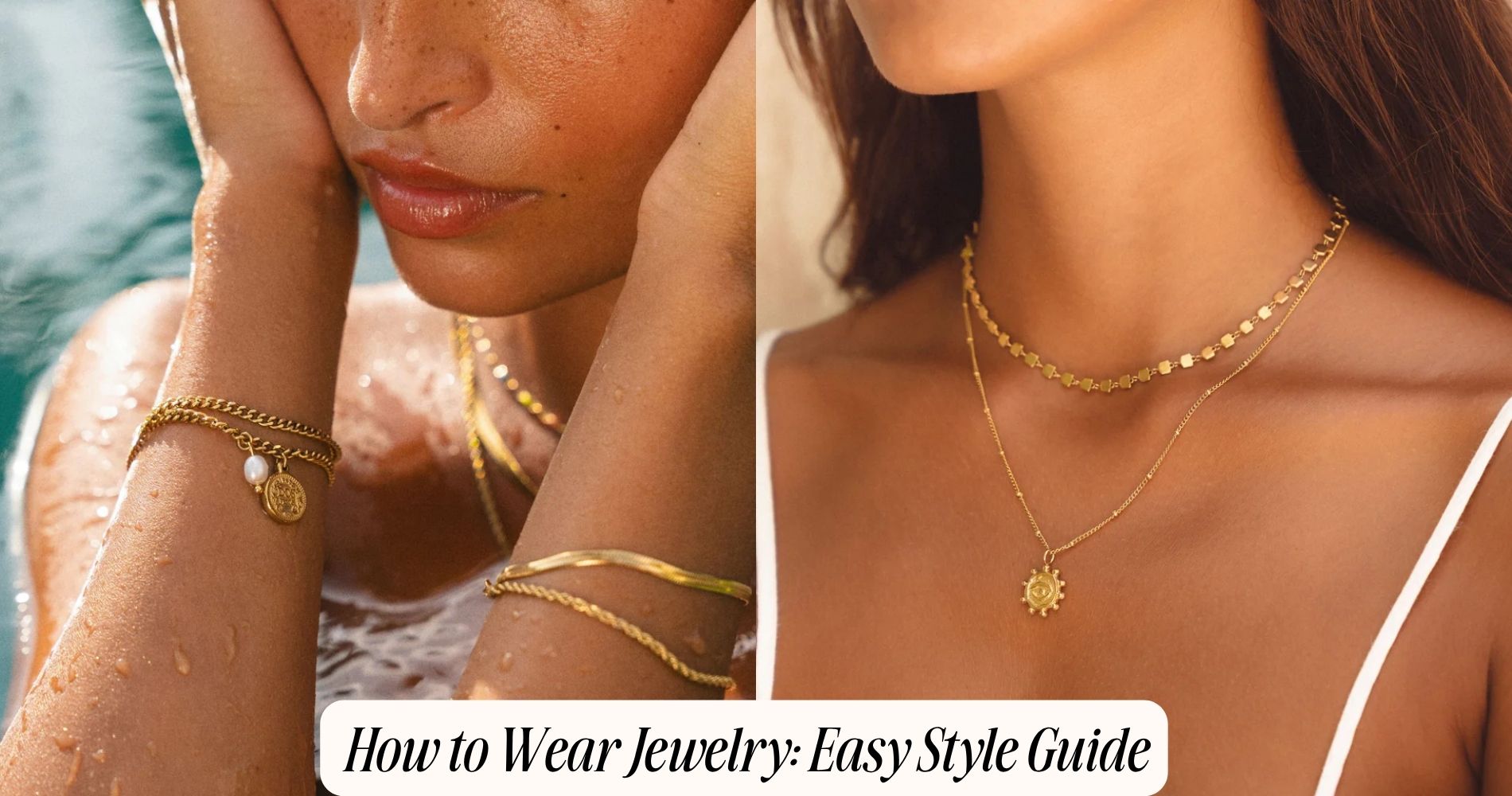
How to Wear Jewelry: Easy Style Guide
Most jewelry mistakes stem from the same place: adding pieces without a clear sense of how they interact with one another or with the outfit. Understanding how to wear jewelry well is less about following strict rules and more about learning a few consistent principles around proportion, balance, and intention. Whether you are starting with one piece or building a layered stack, the logic is the same. Hypoallergenic Jewelry built for daily wear makes that logic easier to act on. This guide covers the principles that make jewelry work across necklines, outfit types, and occasions.
Start With One Focal Point
The most common reason a jewelry combination looks off is too many pieces competing for attention at once. A bold statement necklace, stacked rings on every finger, layered bracelets, and large earrings worn together create visual noise rather than intention.
The focal point principle solves this. Before putting on any jewelry, decide which area of the body you want to draw attention to, and let one piece lead. Everything else supports it or steps back.
If the focal point is a necklace, keep earrings small and rings minimal. If the focal point is a ring stack, a simple chain and small studs complete the look without competing. If you are wearing statement earrings, skip the necklace or wear a very delicate chain that sits well below the earrings.

This does not mean wearing less jewelry. It means organizing what you wear around a clear hierarchy. Once that hierarchy is in place, adding more pieces becomes easier because you have a reference point for whether each addition helps or crowds the composition.
How to Wear Jewelry Across Different Necklines
Neckline shape determines how much space a necklace has to work with and where the eye naturally travels. Matching chain length to neckline shape is one of the most practical skills in everyday jewelry dressing.
| Neckline | Best Chain Length | Notes |
|---|---|---|
| V-neck | 18 to 22 inches | Follow the V direction downward with a pendant |
| Crew neck | 20 to 24 inches | Clear the fabric line; layering works well here |
| Scoop neck | 16 to 20 inches | Small pendant inside the scoop mirrors the curve |
| Off-shoulder | 14 to 16 inches (choker) | Draw attention to the exposed collarbone |
| Turtleneck | 22 to 30 inches | Length is essential; short chains disappear |
| Square neck | 14 to 16 inches | Geometric pendants echo the neckline's clean lines |

Layering Necklaces, Rings, and Bracelets
Layering is one of the most searched aspects of how to wear jewelry, and it follows a consistent logic once you understand proportions.
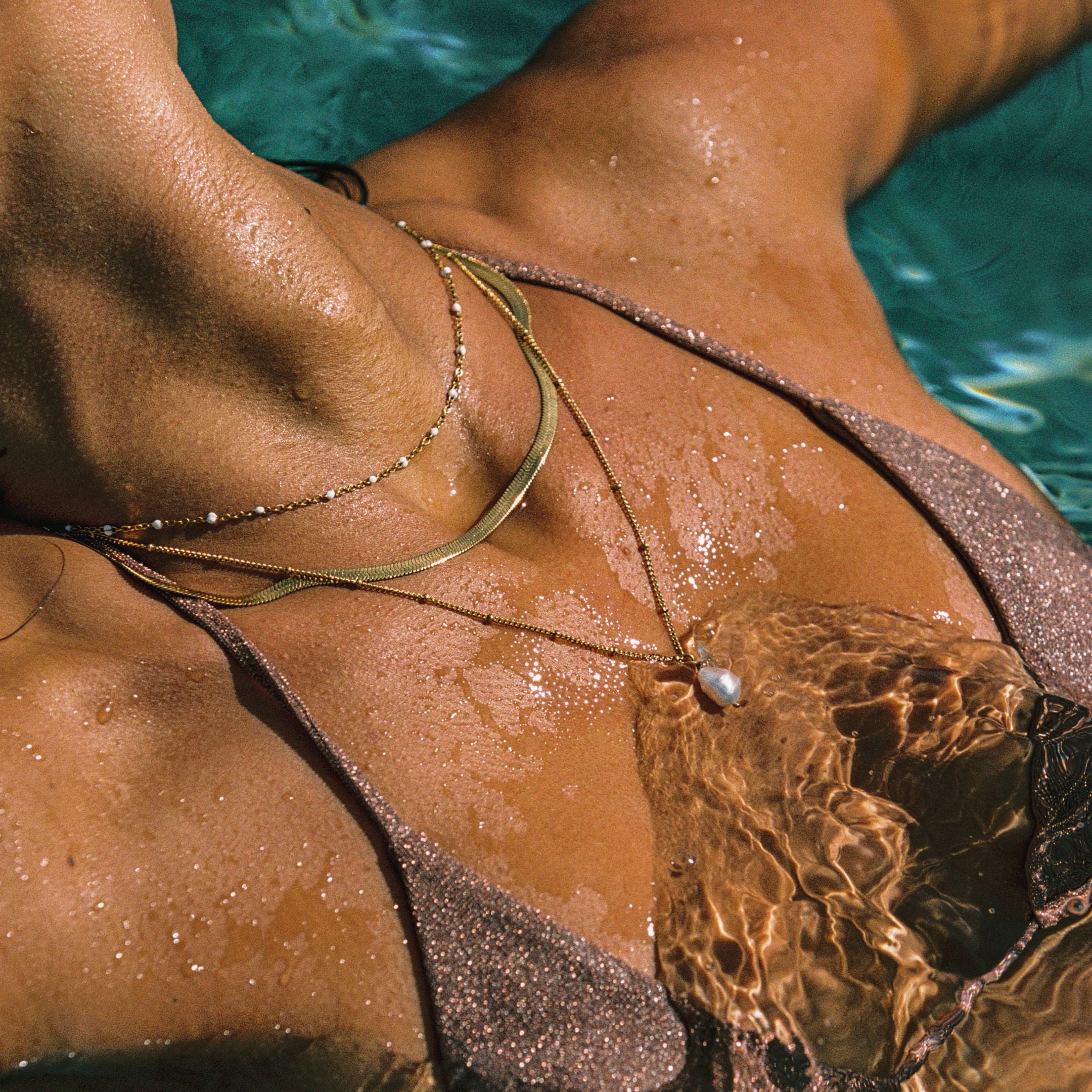
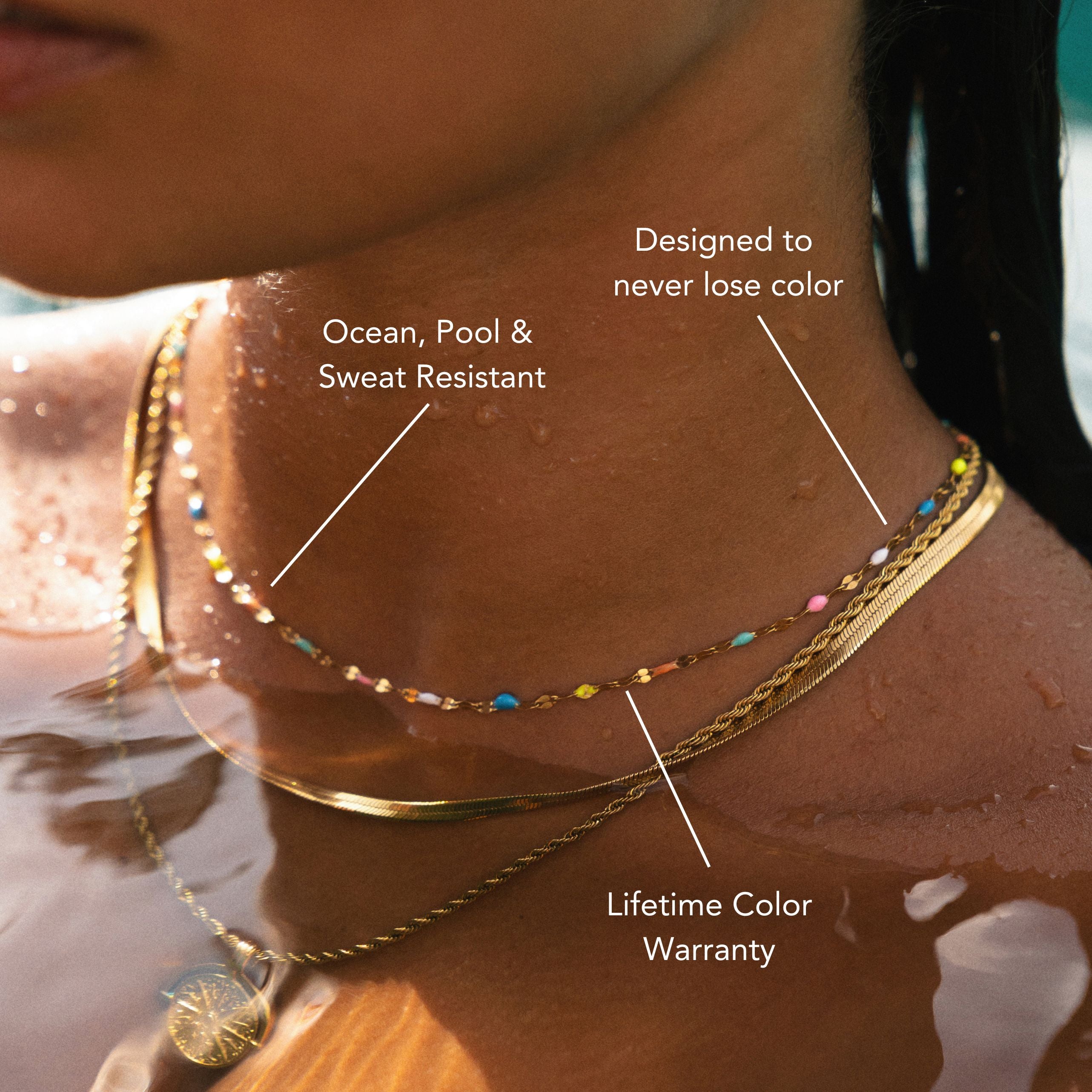
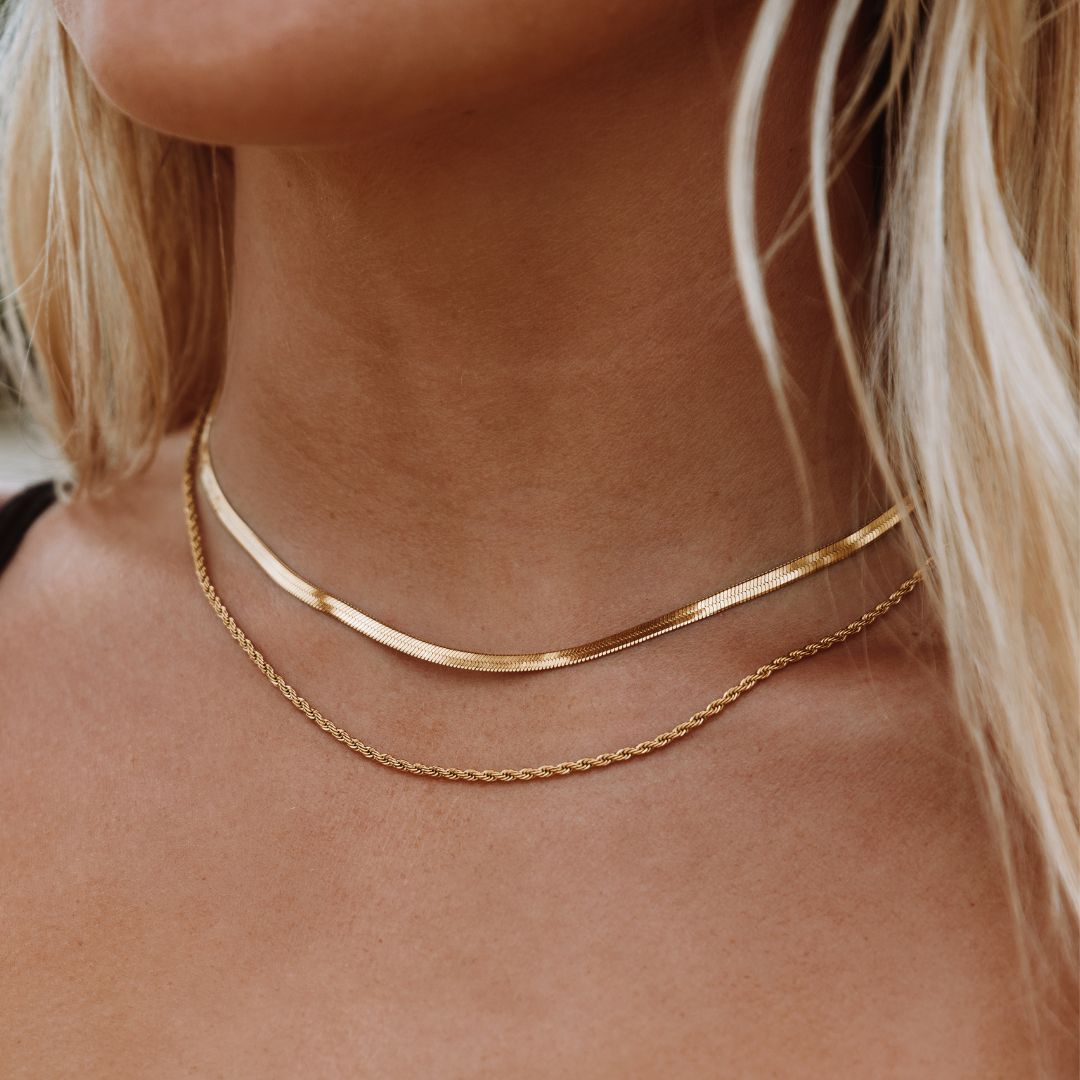
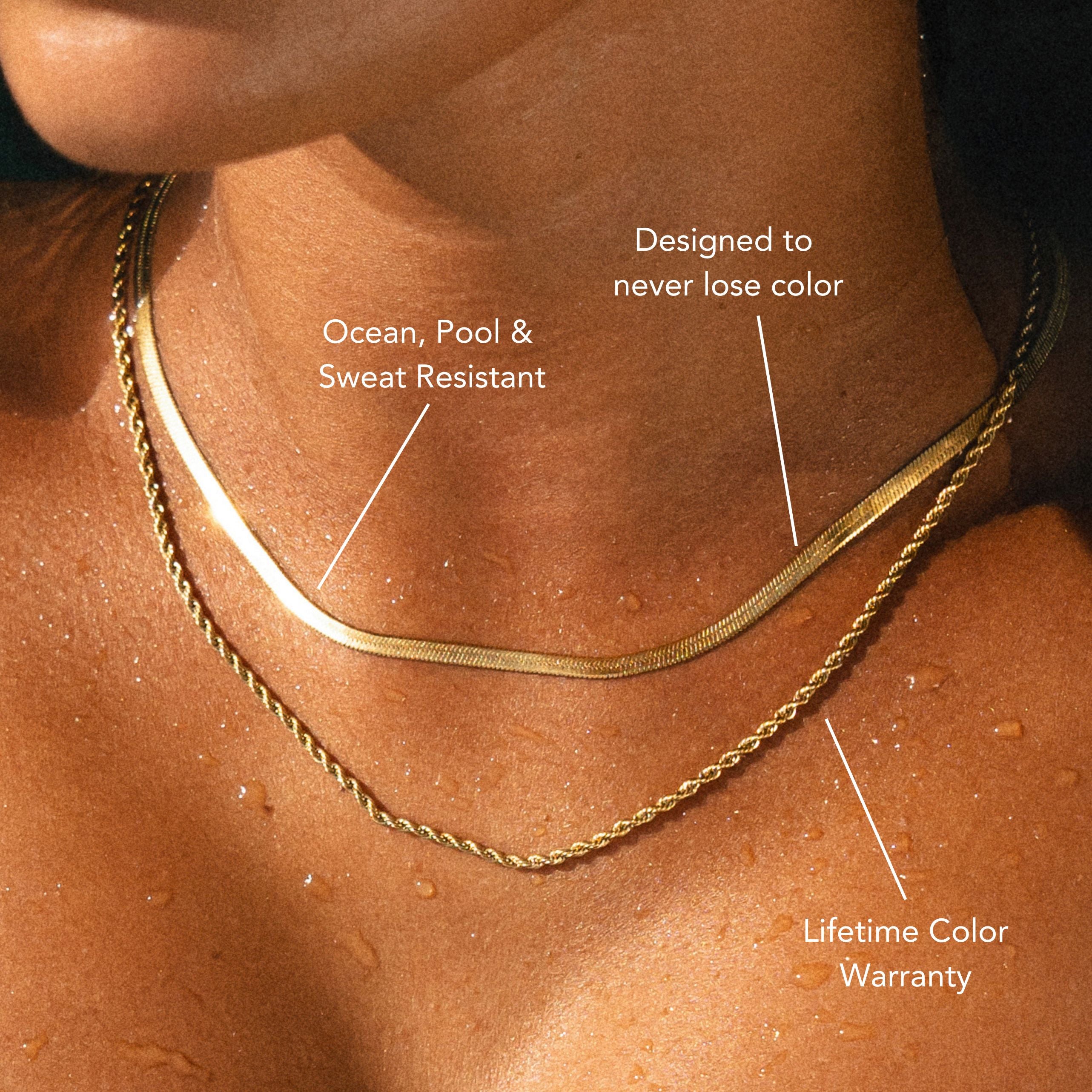
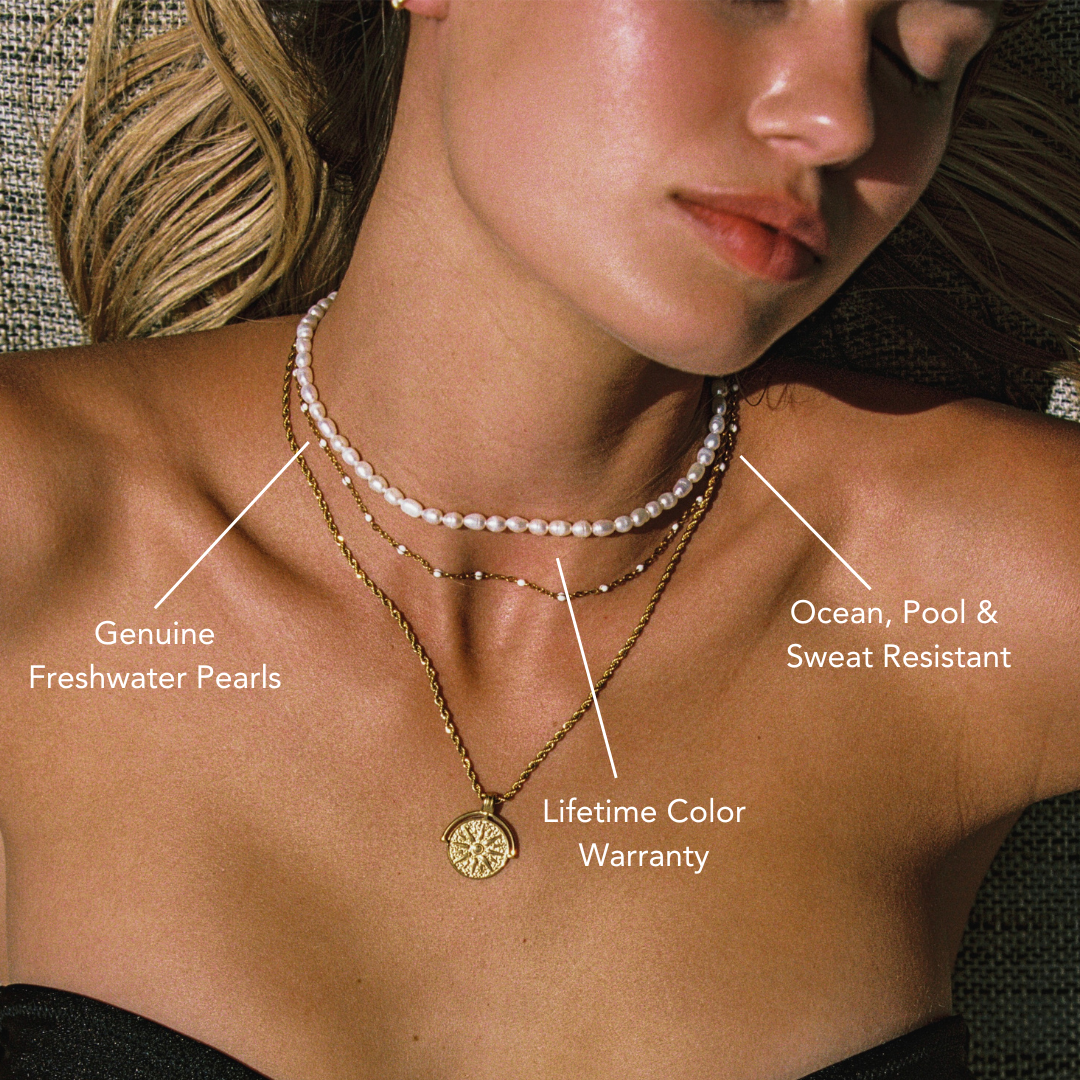
Necklace layering: Each chain in a stack needs visible length separation, at least two inches between layers, so they read as distinct rather than tangled. Start with the shortest piece closest to the collarbone and build outward. Mixing chain textures adds interest without adding visual weight. A fine flat chain alongside a slightly twisted or beaded style at a different length creates contrast that reads as considered. Keep all layers in the same metal tone to hold the stack together visually.
Ring stacking: Distribute rings across multiple fingers rather than loading one finger with everything. A stack of three on one finger alongside a single ring on another reads as intentional. Rings on every finger reads as crowded. Mixing widths within a stack works well: a thin band alongside a slightly wider style creates rhythm. Keep the most detailed or statement ring as the centerpiece and flank it with simpler bands.

Bracelet stacking: Work from thinnest to chunkier as you move up the wrist. A delicate chain closest to the hand, followed by a slightly heavier piece, followed by a wider cuff at the outermost position creates a natural taper that looks considered rather than random. Leave some wrist visible between pieces so each item reads clearly rather than merging into a single mass.
Mixing Metals With Confidence
The idea that you cannot mix gold and silver is outdated. Mixed metal combinations work consistently when you follow two simple guidelines.
First, anchor the combination with one dominant metal. Choose whether the look is primarily gold or primarily silver, then introduce the secondary metal as a supporting element rather than an equal share. Two gold pieces and one silver accent reads as intentional. Equal amounts of both metals read as indecision.
Second, repeat the secondary metal in at least two places. A single silver ring in an otherwise gold stack looks like a mistake. Two silver rings in the same stack look like a choice. The repetition signals intention.
Mixed metals work especially well in layered necklace stacks and ring combinations. A gold chain layered with a silver chain of a different texture at a different length is one of the most wearable combinations in everyday jewelry. Bracelets also work well mixed because the pieces sit near each other naturally and the variety reads as collected rather than mismatched.
Dressing Jewelry Up or Down for Different Occasions
The same piece can read very differently depending on how it is worn and what surrounds it. Knowing how to wear jewelry across casual and dressed-up contexts extends the range of every piece you own.
For casual daily wear, the key is proportion to the outfit's simplicity. A plain white tee with jeans is a blank canvas that supports a layered necklace stack or a statement ring without competition. The casualness of the outfit makes the jewelry the focal point naturally.

For work or more polished contexts, restraint with volume tends to work better than restraint with quality. One well-chosen piece at a mid-weight scale, a single pendant necklace, a simple hoop, a clean ring, reads as put-together without looking overdone. The goal is jewelry that enhances without distracting.
For evening or occasion dressing, the outfit usually already carries more visual weight through fabric, color, or cut. Match that weight with jewelry that has presence: a longer pendant, a wider cuff, a bolder earring. But still apply the focal point principle. One area leading and others supporting produces a more composed result than attempting to dress every element equally.
Choosing Jewelry That Holds Up to Daily Wear
Understanding how to wear jewelry well also means choosing pieces that stay consistent through everything your day involves. A piece that tarnishes, causes skin reactions, or loses its finish after a few weeks limits how freely you can wear it.
For everyday jewelry, three material properties matter most.
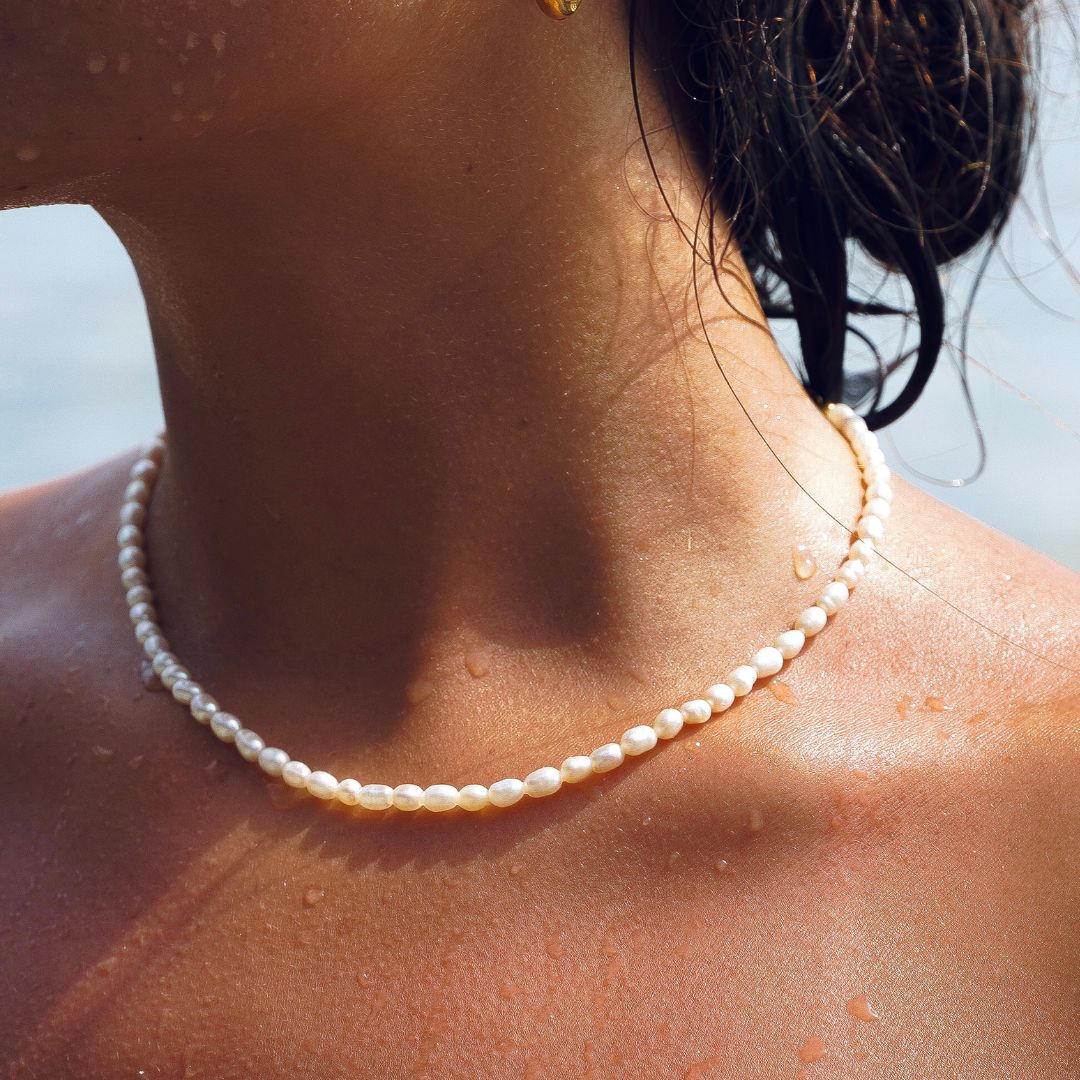
Skin safety comes first. Nickel is the most common cause of contact dermatitis from jewelry, and it appears in many fashion pieces as a base metal or alloy component. Hypoallergenic materials like PVD-coated stainless steel and solid gold do not cause those reactions, which makes them practical for pieces worn continuously against skin, including through gym sessions, travel days, and beach time.
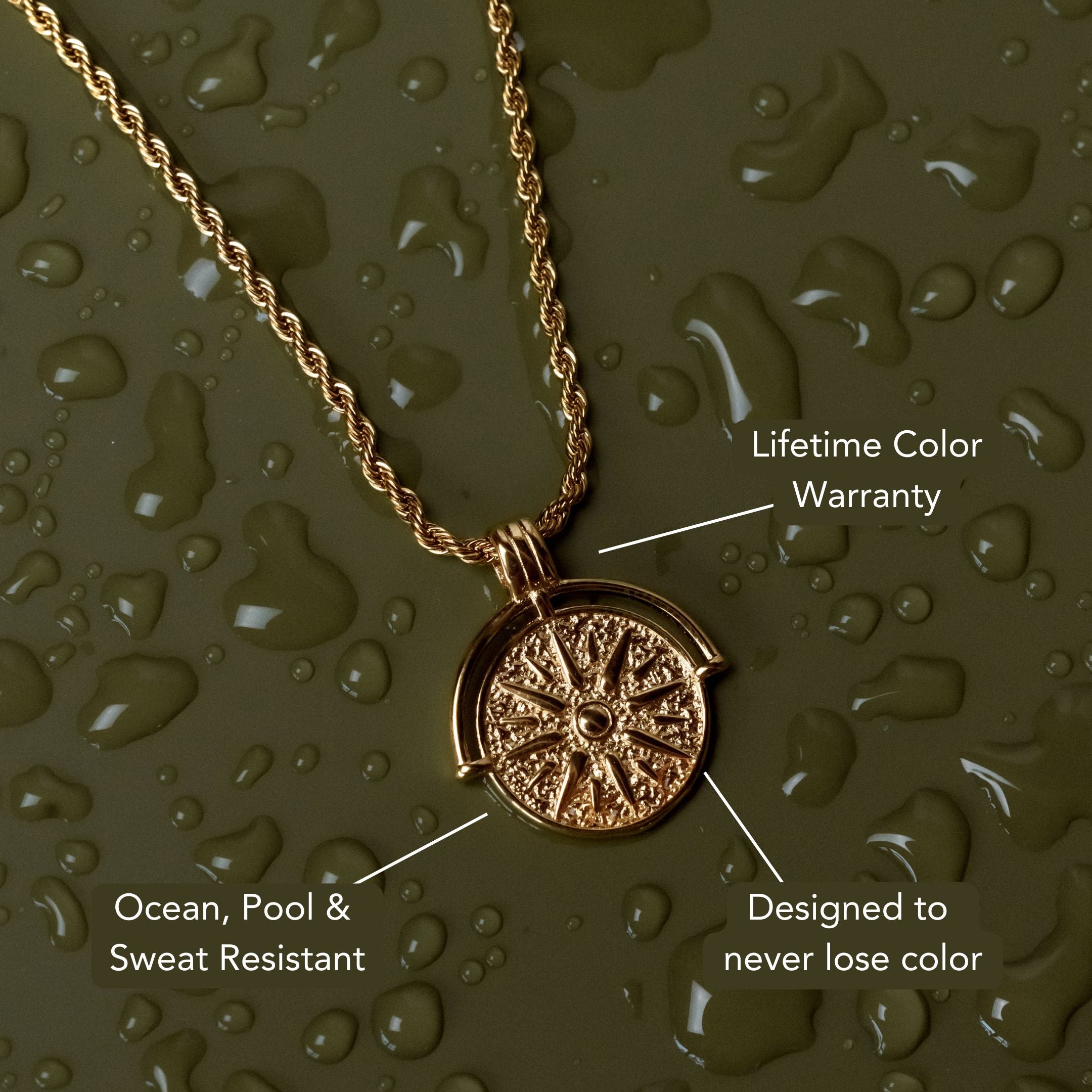
Finish durability comes second. Standard gold-plated pieces use a thin surface layer that wears away with daily contact, sweat, and water exposure. PVD coating bonds the finish at the molecular level, producing a layer 10 times thicker than standard plating. That thickness holds through the conditions that degrade regular plating: daily showers, workouts, and pool sessions.

Weight and comfort come third. Jewelry worn all day needs to be light enough to forget about. Lightweight earrings that do not pull, bracelets that sit flat without snagging, and rings sized correctly so they do not restrict movement make the difference between jewelry you wear every day and jewelry you save for special occasions.
ATOLEA builds its full range on PVD-coated stainless steel with hypoallergenic construction across necklaces, earrings, rings, bracelets, and anklets. Every piece carries a lifetime color warranty, which means the finish is guaranteed regardless of how actively it is worn.
Frequently Asked Questions
How do you wear jewelry without it looking overdone?
Apply the focal point principle: choose one area to lead and keep everything else supporting. A statement necklace with simple studs and minimal rings reads as intentional. The same necklace with layered bracelets, stacked rings, and bold earrings competes with itself. Restraint is not about wearing less. It is about organizing what you wear around a clear visual hierarchy.
How to wear jewelry for beginners?
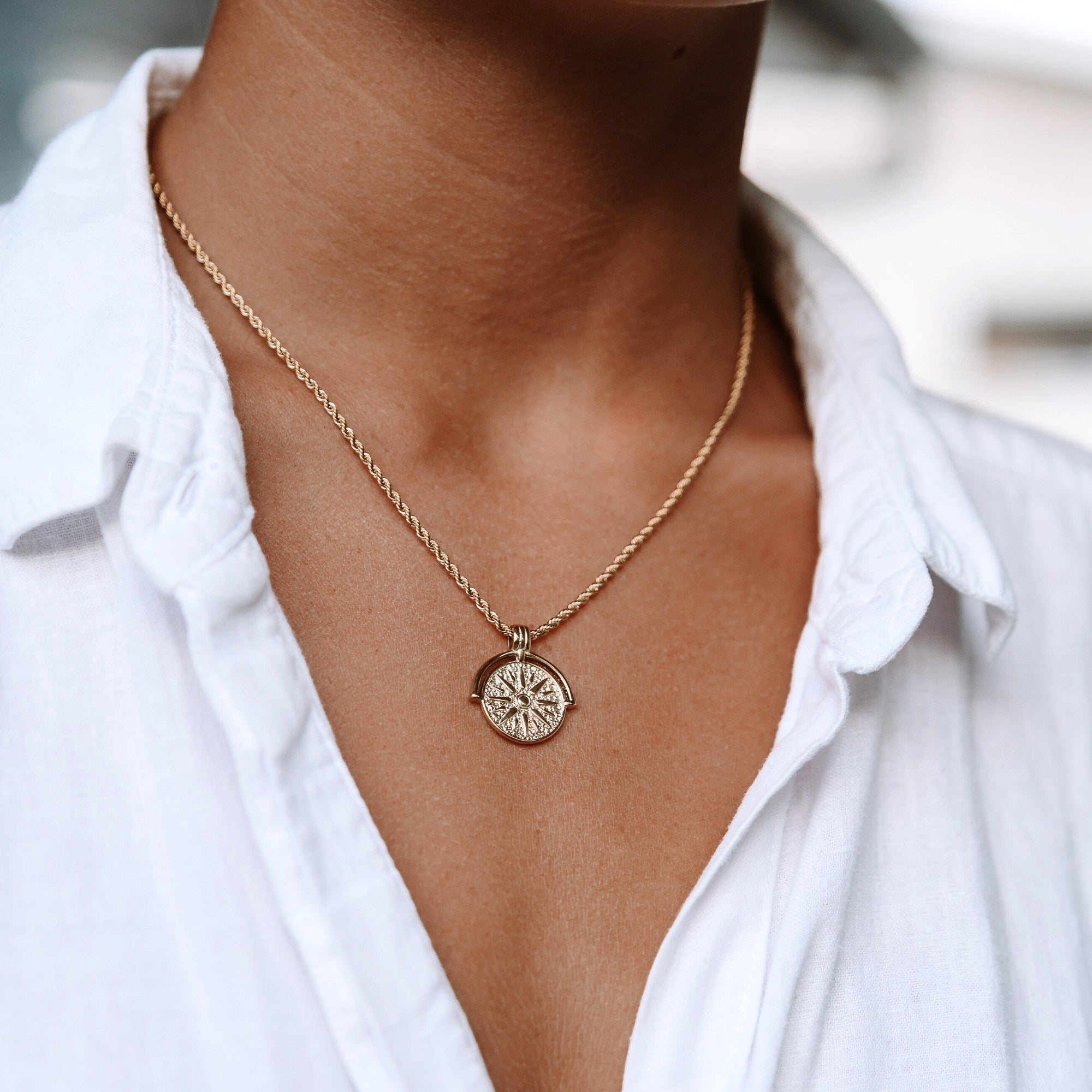
Start with one versatile everyday piece and build from there. A dainty pendant necklace at 18 inches works across most necklines and outfit types and serves as a base that other pieces can join over time. Once that anchor piece feels natural, add a second element, a simple ring or small hoops, and practice the focal point principle before adding more.
Can you mix gold and silver jewelry?
Yes, with two guidelines: one metal dominates and the secondary metal repeats in at least two places. A mostly gold combination with two silver rings works. Equal amounts of both metals in the same area tends to look unplanned. Mixing works especially well in layered necklace stacks and ring combinations where the pieces sit in close proximity.
Conclusion
How to wear jewelry well comes down to a few principles applied consistently: anchor every combination with one focal point, match chain lengths to neckline shapes, layer with visible separation between pieces, and mix metals with a dominant tone and intentional repetition. The material your jewelry is made from determines how freely you can apply those principles. Pieces that hold their finish through daily wear, skin contact, and water exposure remove the maintenance decisions from the equation and let the styling choices lead.





Leave a comment
This site is protected by hCaptcha and the hCaptcha Privacy Policy and Terms of Service apply.