


Different Types of Necklaces Explained
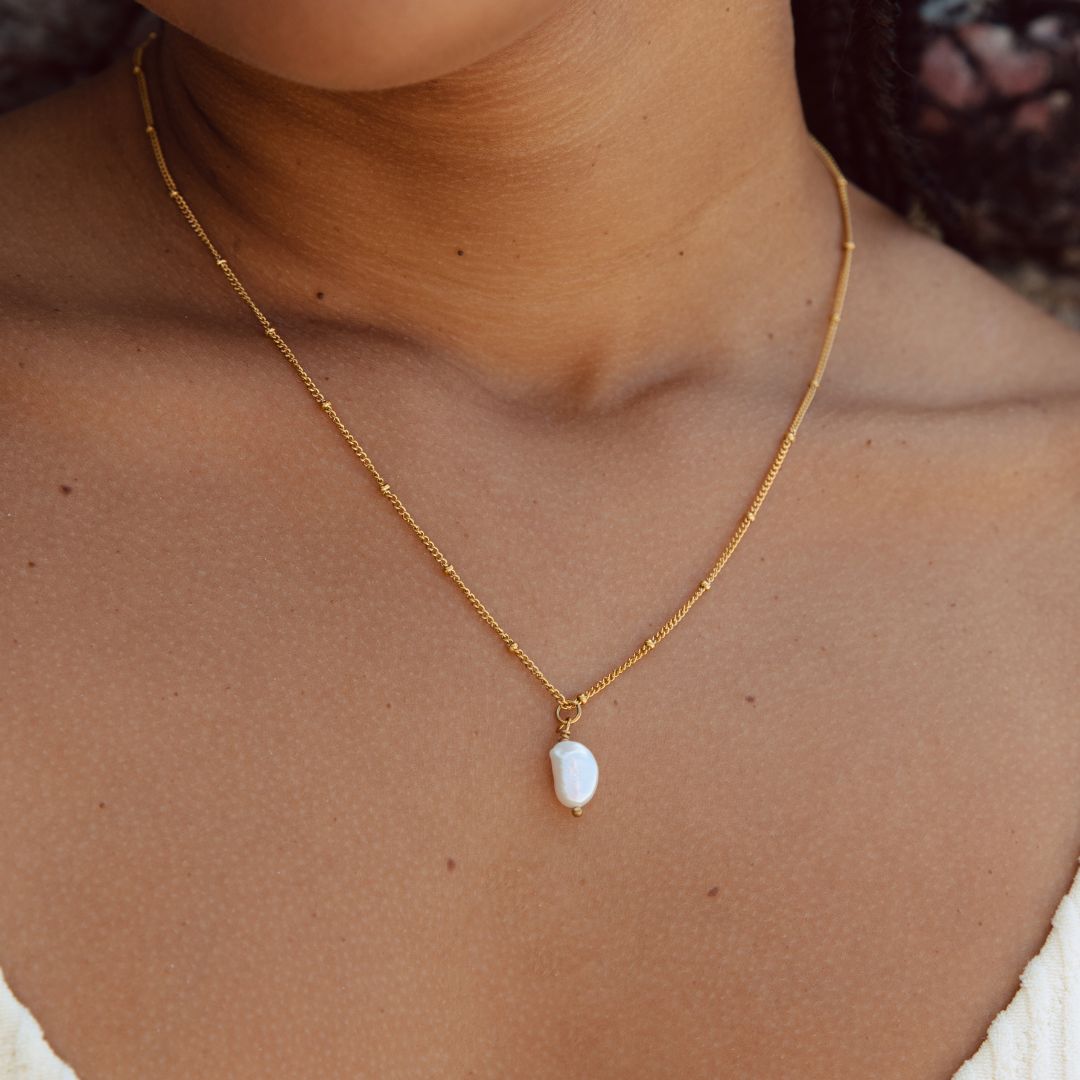
Discover different types of necklaces by exploring chain styles like curb, rope, Figaro, and paperclip, crafted in 10k–18k gold, sterling silver, stainless steel, titanium, or platinum with secure lobster clasps. Pair pendant drops, lockets, or medallions by matching metal tone, bail size, and chain gauge, or opt for timeless simplicity with pieces from our Single Pearl Necklaces collection. Choose chokers or collars (12–16") for structure, princess lengths (16–18") for everyday wear, and matinee or opera lengths for elegant drape. Try lariats or Y-shapes for vertical lines, or bold bib styles for statement impact. Layer varied lengths and textures for a crisp, balanced composition—there’s more to master.
Chain Necklaces
Metal meets form in chain necklaces, where link geometry, gauge, and finish define the look and durability.
You evaluate chain necklace materials first: solid gold (10k–18k) resists tarnish and bends less at higher gauges; sterling silver offers brightness but needs anti-tarnish care; stainless steel and titanium deliver hypoallergenic strength; platinum brings heft and abrasion resistance.
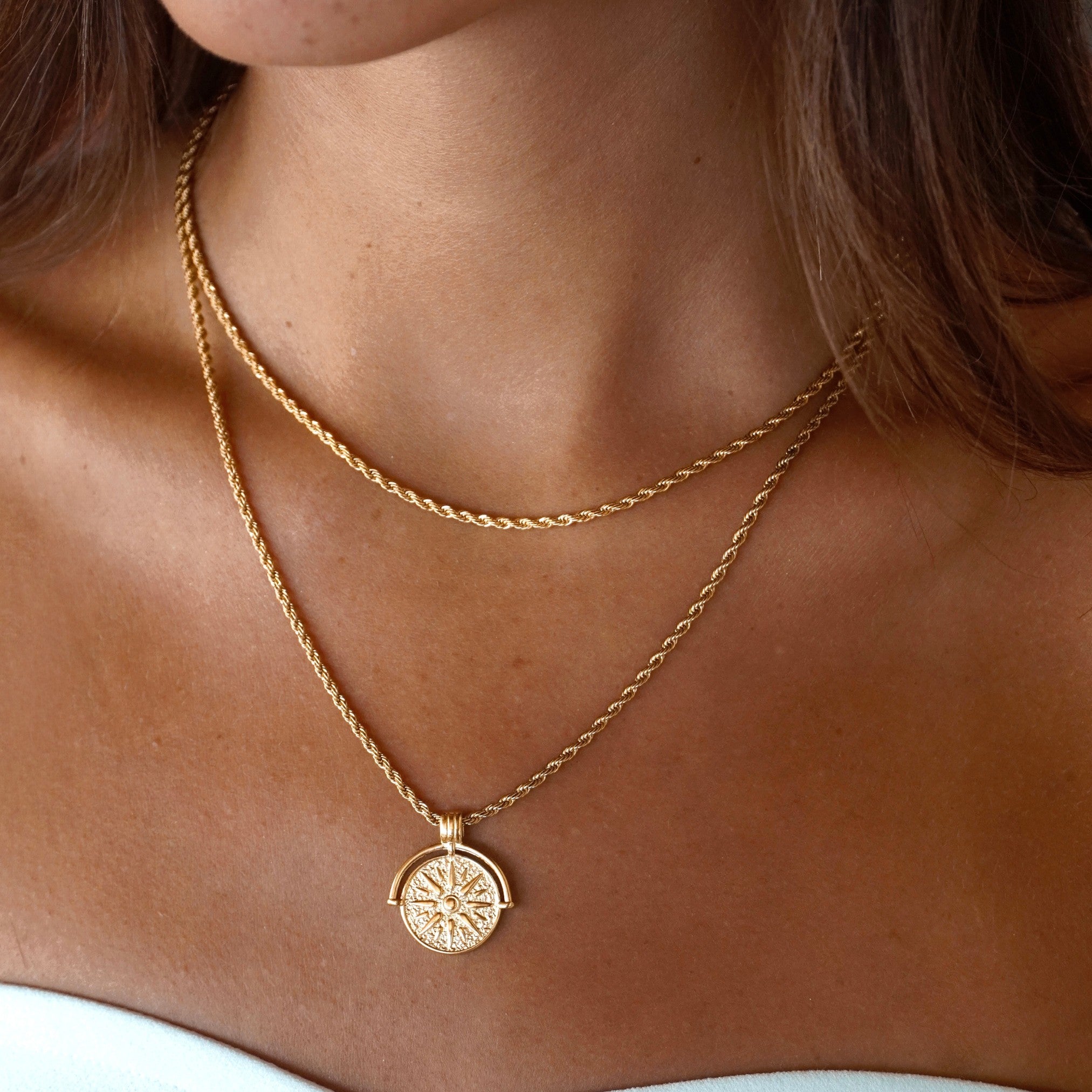
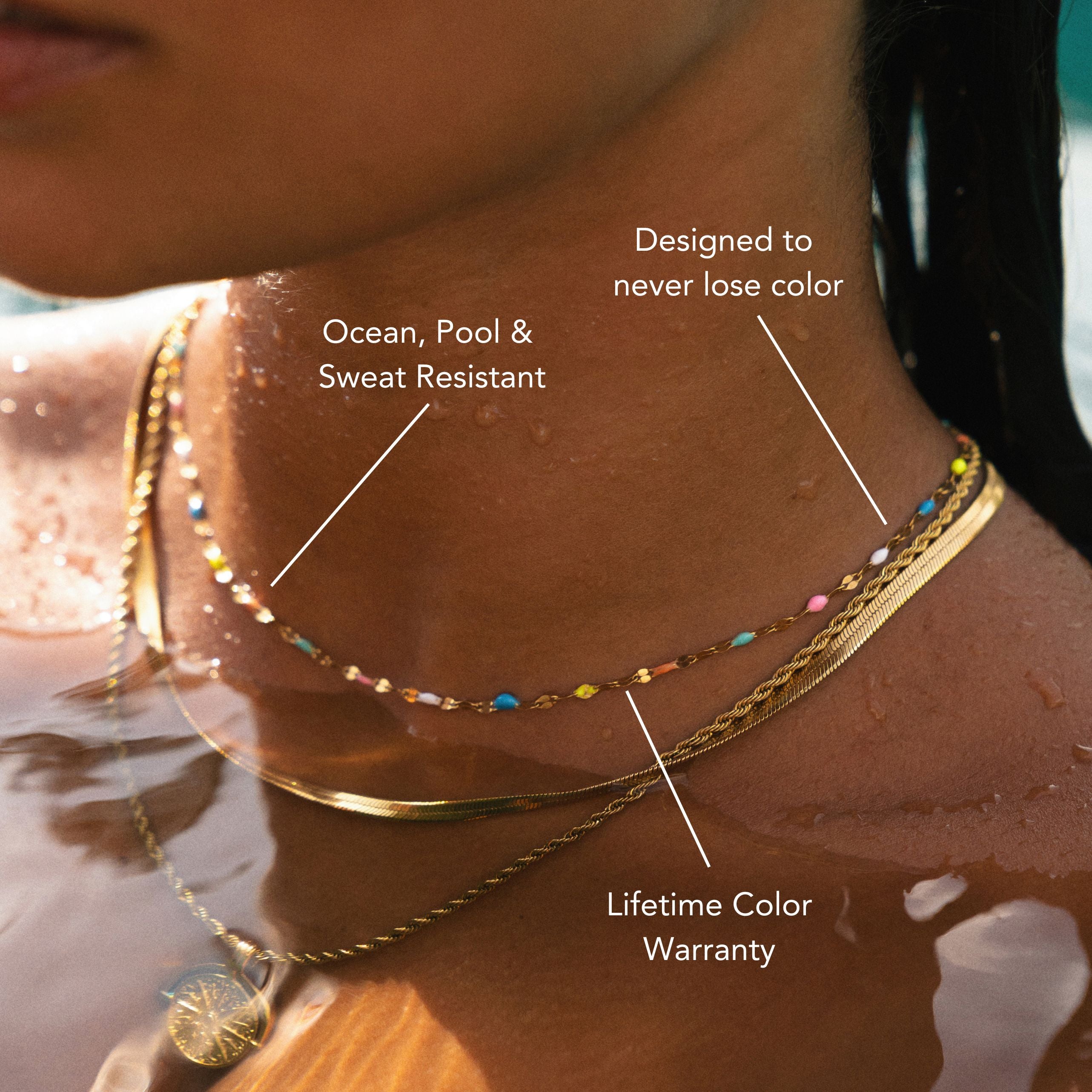
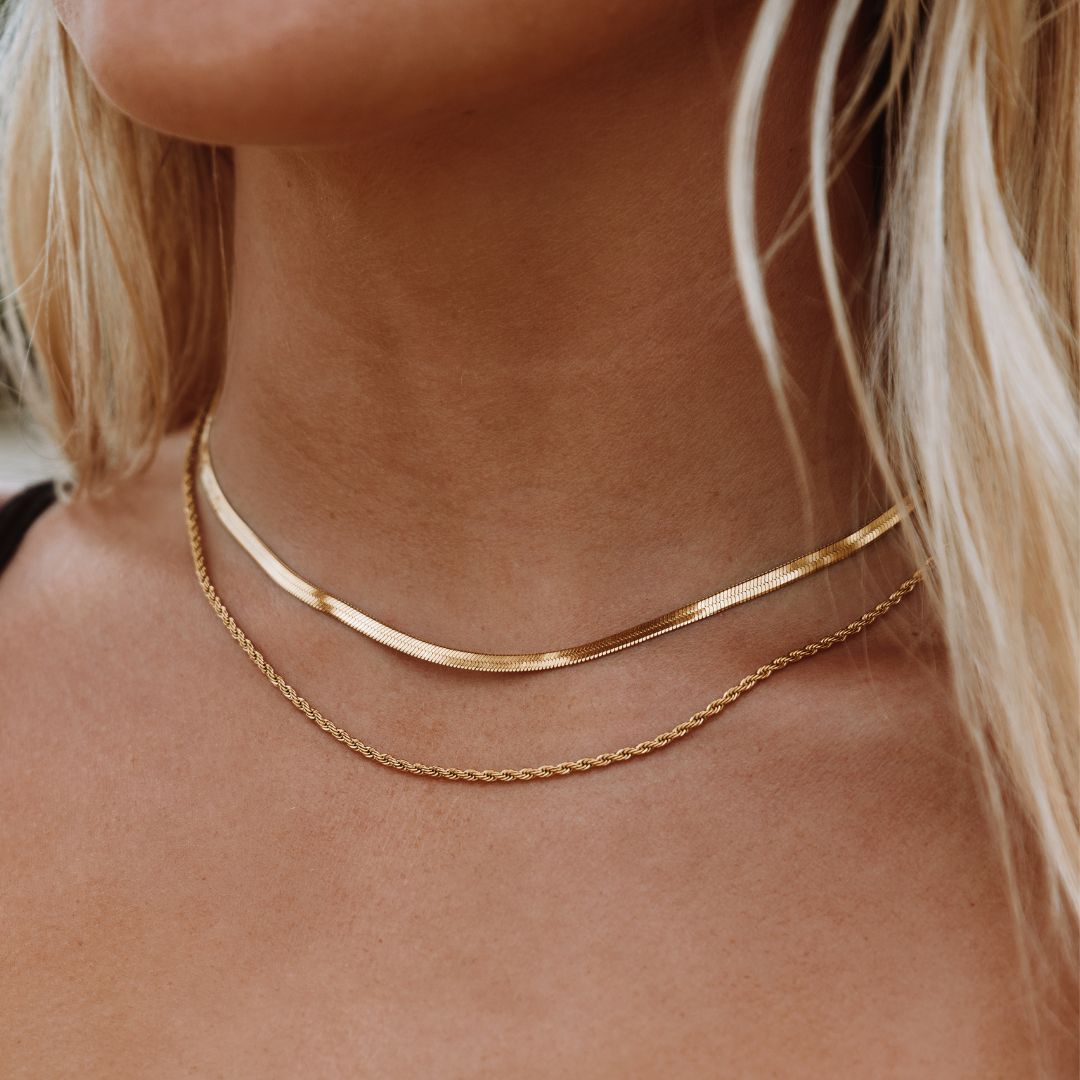
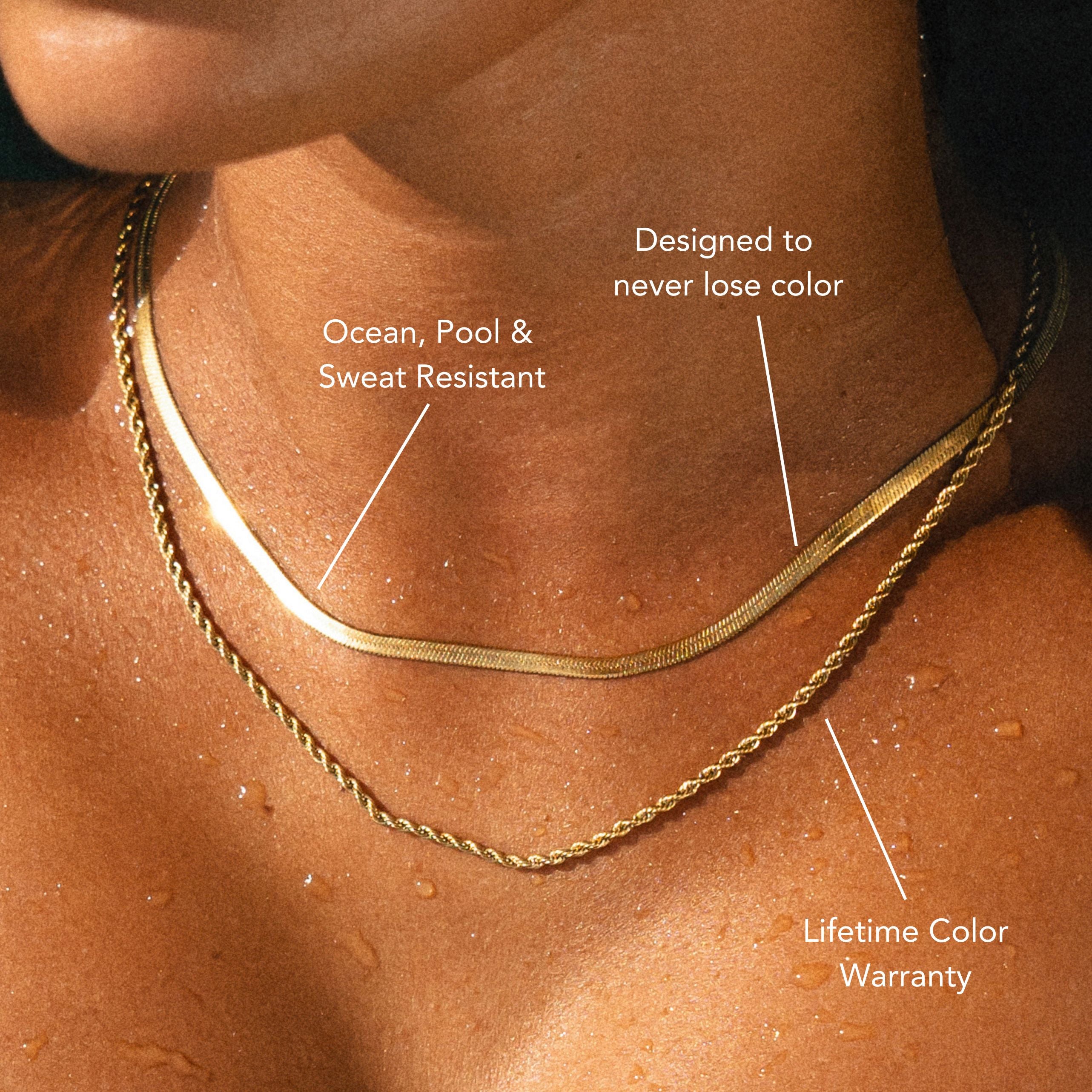
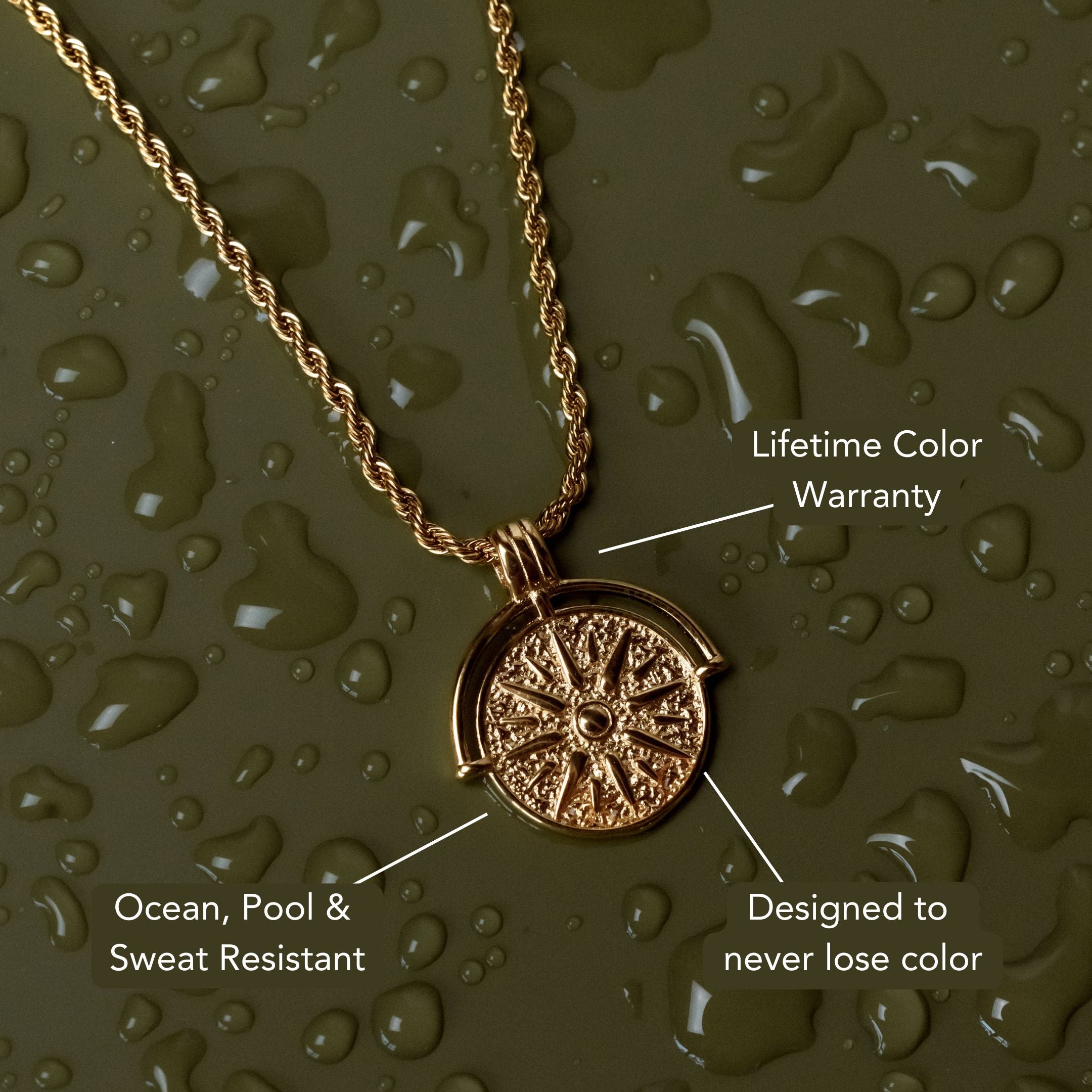
Then weigh chain necklace styles. A curb or Cuban lies flat with beveled links; rope twists for multidirectional shine; Figaro alternates long and short links; cable stays classic and repairable; box chains stack clean; wheat braids for drape; paperclip elongates the silhouette; herringbone flows but kinks easily.
Choose clasp integrity (lobster vs. spring ring), micro-soldered links, and appropriate thickness for standalone wear or layered stacks.

Pendant Necklaces
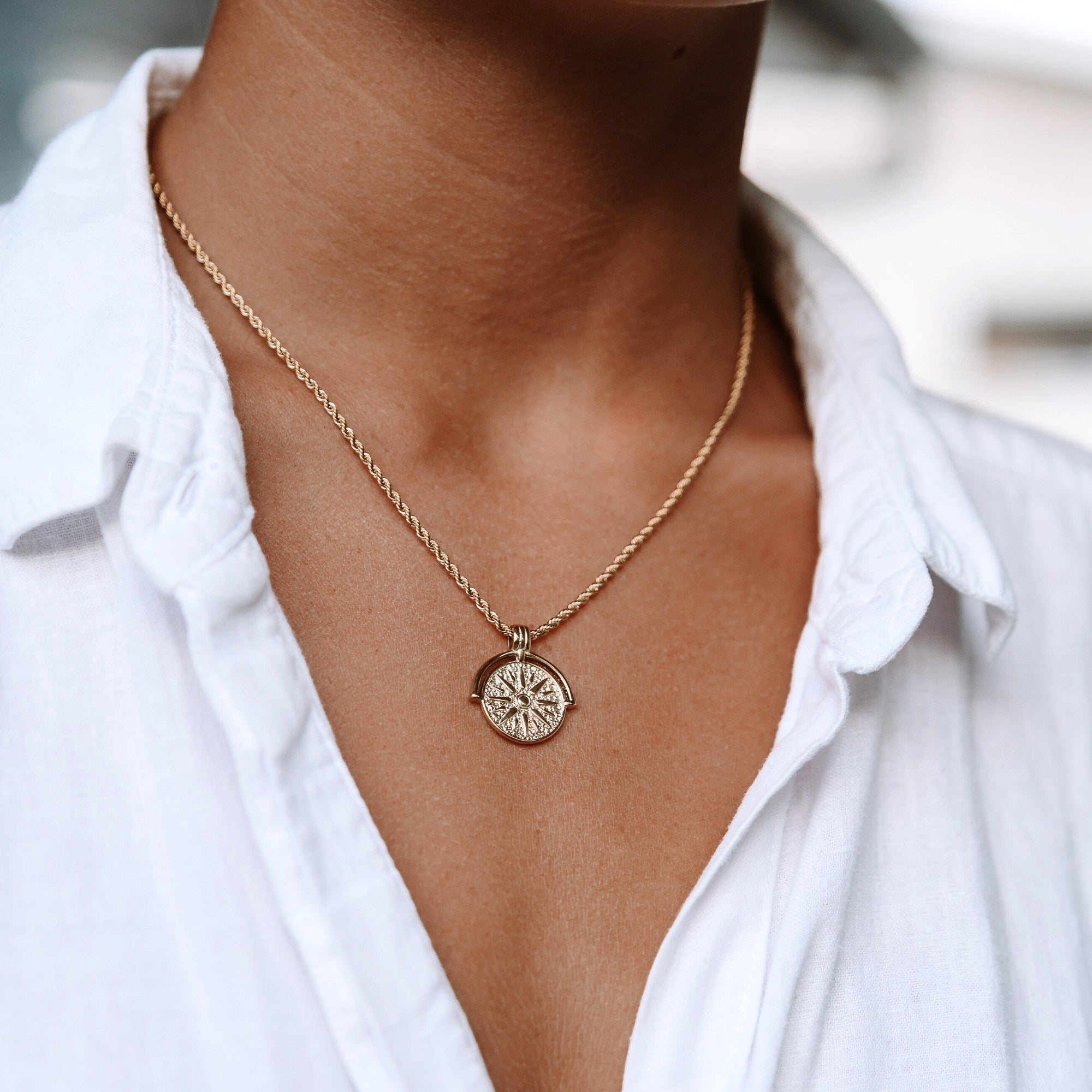
If chain geometry sets the stage, a pendant makes the statement: you suspend a focal element from a dependable chain, matching weight, bail size, and metal to the design.
You choose pendant styles by scale and proportion: solitaire drops, lockets, talismans, medallions, bar pendants, and minimal charms.
Verify the bail inner diameter fits your chain gauge; a too-tight bail abrades links. For gemstone pendants, consider stone hardness, setting security (bezel vs. prong), and table exposure.
Pair heavier pendants with curb, rope, or box chains; reserve cable or wheat for moderate weights. Align metals—sterling with rhodium plate, 14k gold, or platinum—to avoid galvanic mismatch.
Target mid-chest placement for versatility, adjust with an extender, and guarantee the pendant hangs balanced without torque.
Choker Necklaces
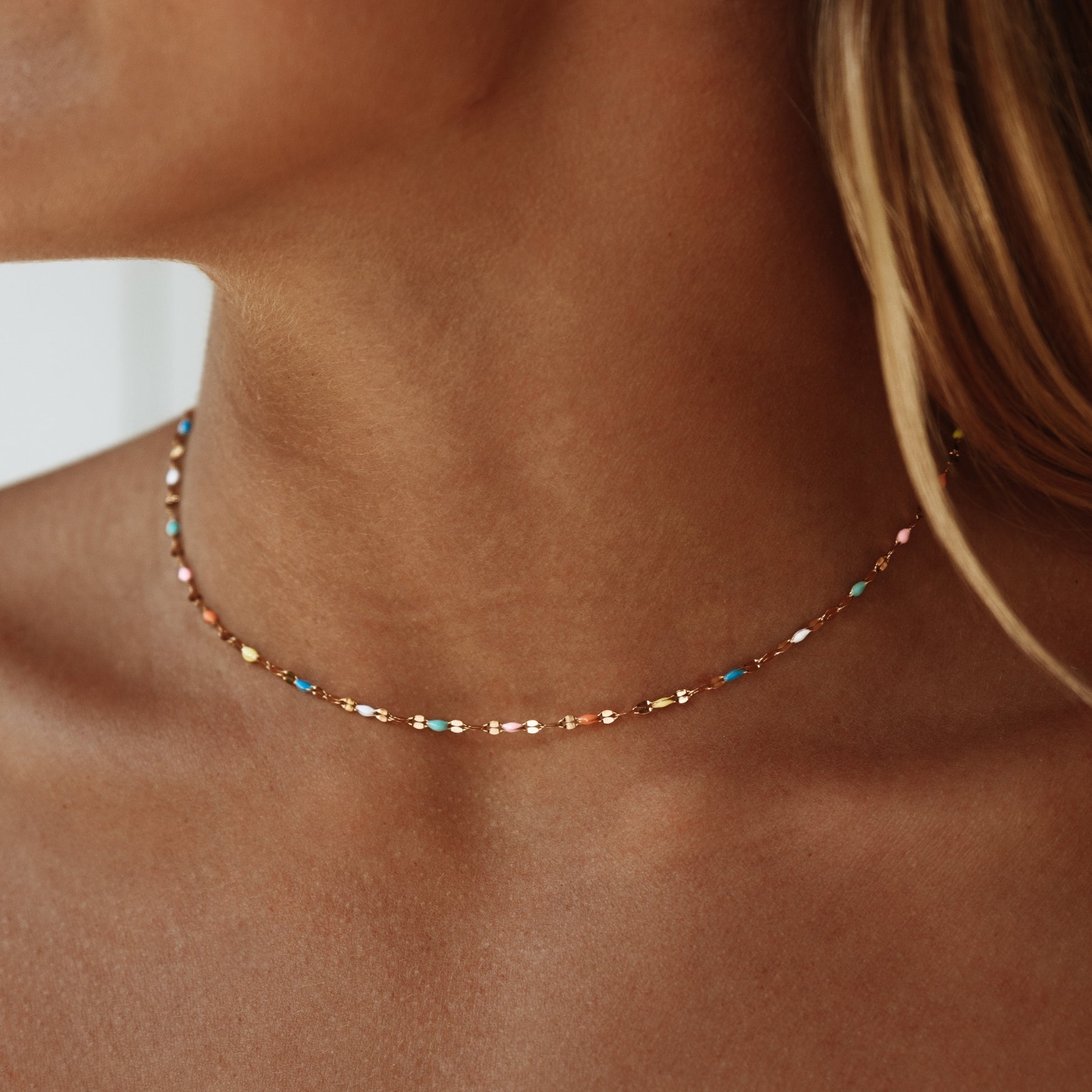
Though trends cycle, chokers stay defined by placement: they sit high on the neck at 12–16 inches, demanding exact circumference measurement and a secure, micro-adjustable clasp.
You’ll get the best fit by measuring tight at the base of your neck, then adding 0.25–0.5 inches for comfort and breathability.
Evaluate choker materials first. Solid options include sterling silver, 14k gold, stainless steel, titanium, and vermeil; each offers distinct hardness, tarnish resistance, and weight.
Flexible choices—silk ribbon, velvet, leather, and microfiber—deliver tactile contrast and easy drape. For embellishment, consider seed pearls, pavé-set crystals, station diamonds, or enamel plaques.
Choker styles span minimalist metal bands, slender chains with central motifs, velvet strands with lockets, and torque-inspired open fronts.
Balance width to neck length; slimmer profiles elongate, broader bands read bold.

Collar Necklaces
Architecture for the clavicle, collar necklaces sit just below the neck at 12–14 inches, wrapping the upper chest with a structured, close-fitting line. You choose them for definition and polish: they frame the décolletage, align with necklines, and anchor statement components without droop.
Explore collar styles from rigid torque bands to articulated panels and hinged bibs that contour smoothly.
Prioritize collar materials that retain architecture: sterling silver, gold, titanium, or lacquered brass for crisp form; smooth leather or satin cording for softened edges; pearl collars with uniform luster for classic symmetry.
Look for curved plates, graduated links, or mesh that drapes yet holds shape. Secure with box clasps or magnetic closures for clean profiles.
Balance proportion—broader collars suit minimal tops; slimmer profiles complement patterned fabrics.
Princess-Length Necklaces
Step down from the structured collar to the versatile princess length—typically 16–18 inches—that lands at or just below the clavicle. You’ll find it frames pendant drops, solitaires, and station necklaces without interfering with necklines.
Prioritize proportion: this length centers visual weight at the sternum, balancing most face shapes and torso lengths.
Evaluate princess length materials with intent. In fine jewelry, you might choose 14k or 18k gold cable, diamond-cut wheat chains, or platinum trace links for tensile strength and polish retention.
For gemstones, bezel-set pendants, prong-set solitaires, or graduated tennis configurations maintain articulation without torque. In fashion pieces, consider stainless steel, gold vermeil, or titanium for durability and hypoallergenic wear.
Explore princess length styles like bar pendants, lockets, pearls, or geometric enamel motifs to refine everyday rotation.
Matinee and Opera-Length Necklaces
Two lengths extend your styling range: matinee at 20–24 inches and opera at 28–36 inches.
You’ll notice matinee strands sit at the bust line, ideal for crewnecks, boatnecks, and structured collars. Opera lengths drape lower, skimming the sternum or doubling for a two-tier effect. Both deliver style versatility across fashion occasions.
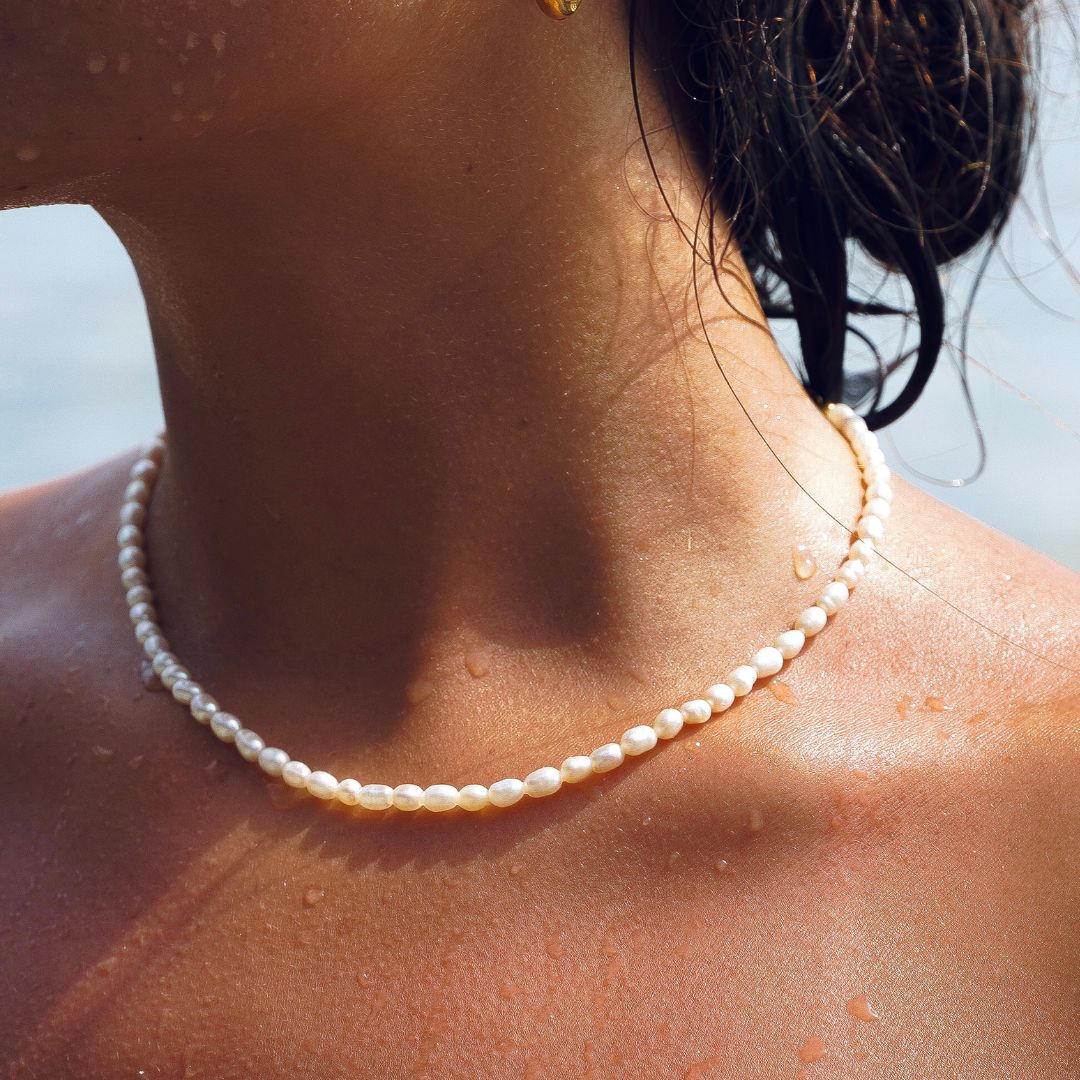
Choose materials deliberately. Pearls (Akoya, freshwater, or South Sea) give luster and uniformity; graduated strands add visual weight without bulk.
Diamond stations on cable or box chain create scintillation with minimal metal. For warm tone, select 14k or 18k yellow gold; for contemporary edge, opt for platinum or rhodium-plated sterling.
Gem bead necklaces—onyx, malachite, or lapis—provide saturated color. Use extenders or hidden clasps to fine-tune length and layering proportions.

Lariat and Y-Necklaces
While both elongate the neckline, lariat and Y-necklaces achieve it through distinct constructions. A lariat omits a clasp; you thread, knot, or loop weighted ends—often capped with beads, charms, or tassels—through a ring or around themselves.
This adjustability defines lariat styles, letting you switch drop length, create asymmetric lines, or double-wrap fine chains. Materials matter: silk cords give fluid drape, box or snake chains offer sleek rigidity, and gemstone stations add calibrated sparkle.
A Y-necklace uses a fixed center drop, typically joined by a bail, bar, or hinged connector. That structure underscores y necklace versatility: it layers cleanly with collars, frames V- and scoop-necklines, and balances pendants without sliding.
Choose proportionate gauges, secure soldered links, and polished finishes to keep lines crisp and elongating.
Statement and Bib Necklaces
Although both command attention, statement and bib necklaces do it through different builds and scale.
You reach for statement styles when you want one focal element: an oversized pendant, pavé cluster, sculptural metal plate, or oversized chain links. Materials matter—think polished brass, rhodium-plated alloy, resin in saturated hues, faceted glass, or semi-precious stones set in bezel or prong settings.
Bib designs spread across the décolletage, using graduated tiers, scalloped panels, or mesh foundations to create a wide front drape. They often rely on bead embroidery, cabochon frames, filigree plaques, or mother-of-pearl tiles stitched onto textile backings.
Pay attention to weight, backing smoothness, and clasp strength; you want balanced distribution, skin-friendly finishes, and adjustable length so the neckline alignment stays intentional.
Layered Necklaces
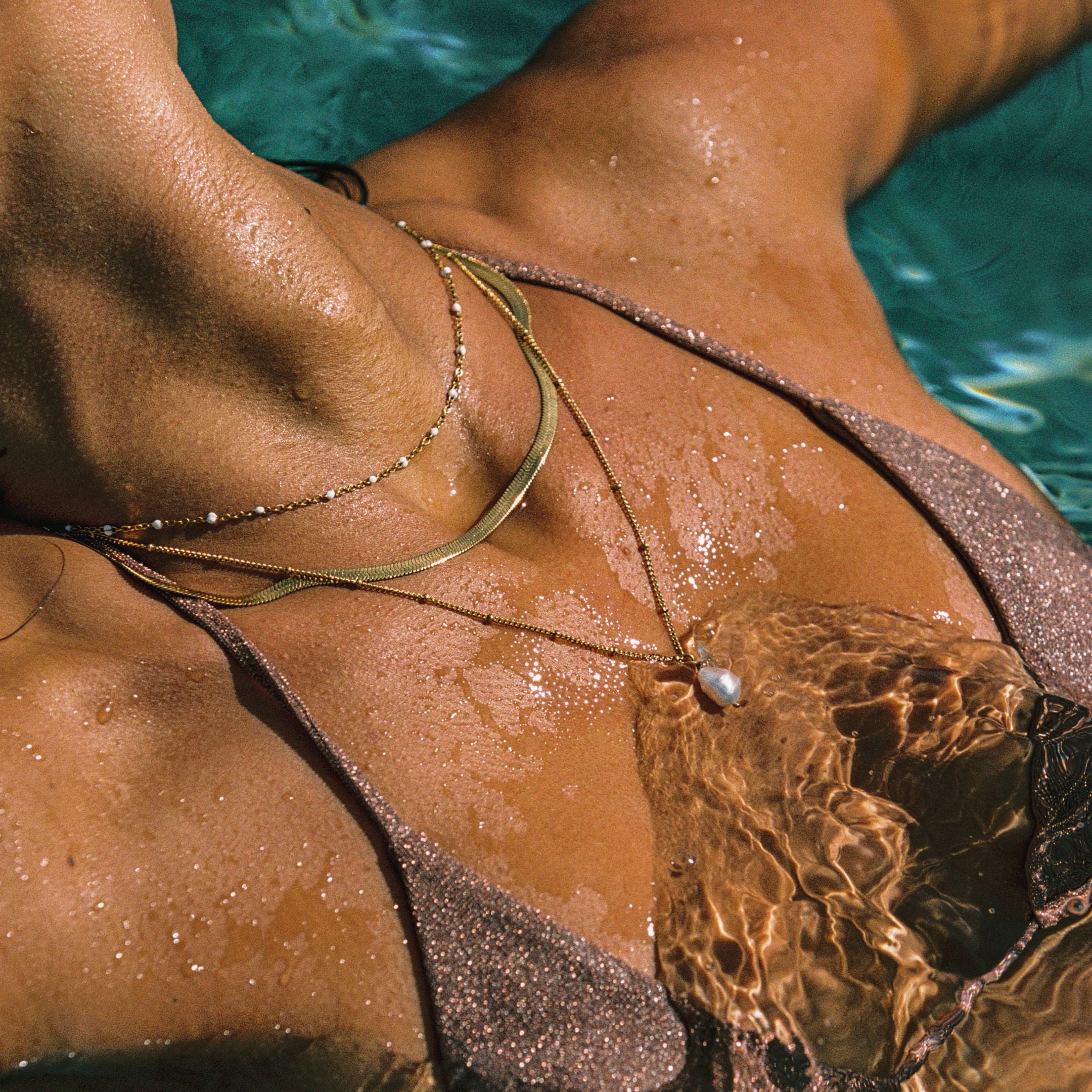
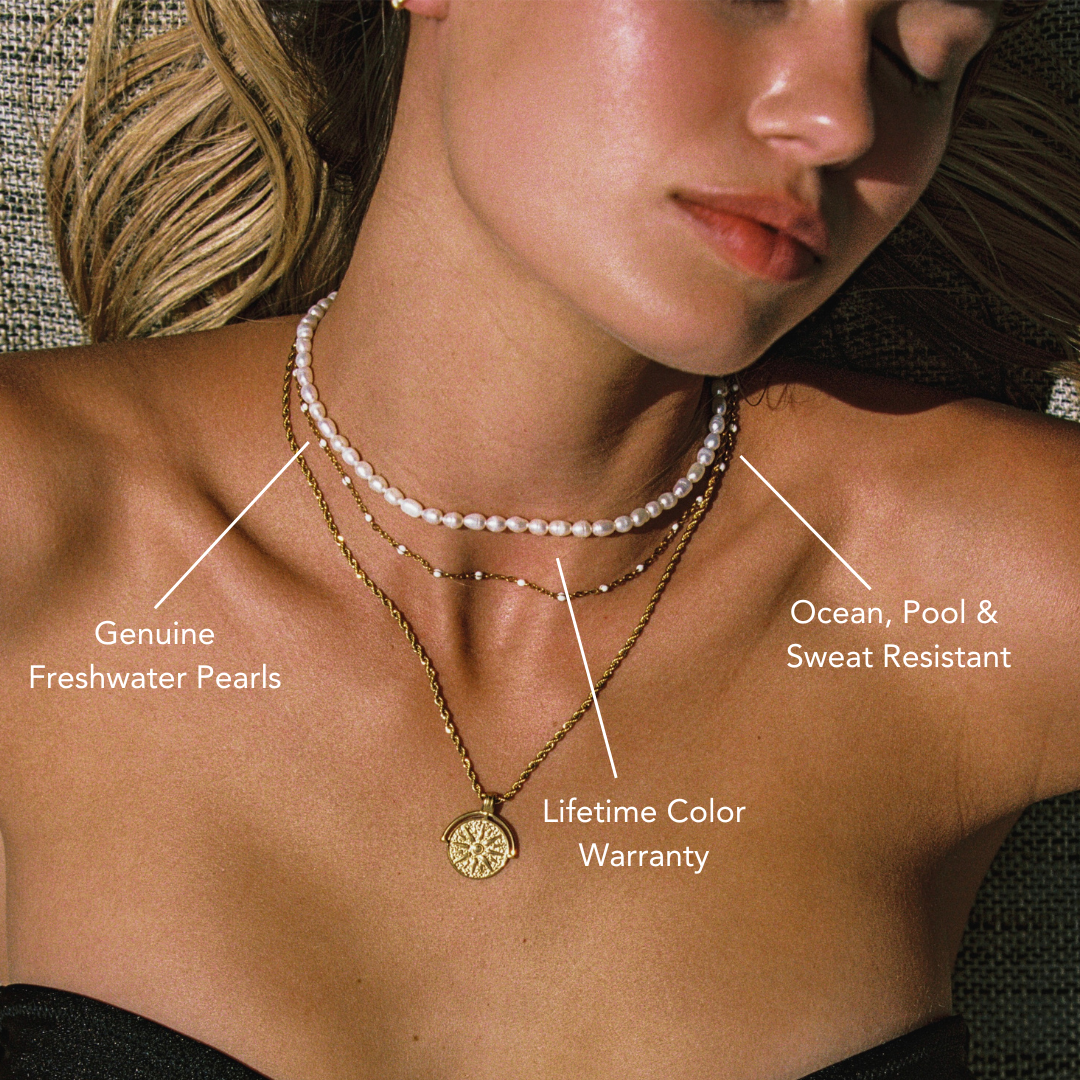
Architecture guides layered necklaces: you stack chains of varying lengths, gauges, and textures to create a deliberate vertical rhythm. You start with a 14–16 inch anchor—usually a fine cable or curb chain—then add a mid-length box or paperclip link, and finish with a longer pendant on a snake or wheat chain. Contrast metals or stay tonal; both read intentional when proportions align.
Prioritize balance: vary link geometry, thickness, and pendant scale. Use extenders or a multi-clasp necklace separator to prevent tangling. Choose hollow rope or lightweight Figaro to reduce bulk; reserve solid pieces for the base.
For neckline harmony, mirror plunge depths or crew collars.
Styling tips: repeat motifs once.
Layering techniques: odd counts, staggered drops, and graduated gauges keep the composition crisp.
Frequently Asked Questions
How Do I Prevent Necklace Chains From Tangling During Travel?
Use straws or silicone tubes to thread each chain, clasp closed. Store in microfiber pouches or a compartmentalized jewelry roll. Employ anti-tarnish strips, separate metals, and label lengths. These travel tips optimize chain organization and minimize abrasion and knots.
What Necklace Materials Are Hypoallergenic for Sensitive Skin?
Choose inert metals: platinum, palladium, titanium, surgical stainless steel (316L/implant grade), and 14k–18k nickel‑free gold; sterling silver may work with rhodium plating. Avoid nickel and brass. Consider gold alternatives like vermeil. Confirm tolerance with dermatologist‑guided allergy testing.
How Should I Clean Gemstone Versus Metal-Only Necklaces?
Clean gemstones with lukewarm water, mild dish soap, and a soft brush; avoid ultrasonic for porous stones. For metal care, use specific polish: silver cloth, gold gentle soap rinse, platinum mild cleanser, avoid abrasives; dry thoroughly, store separately.
Which Necklace Styles Complement Different Necklines and Collars?
Pair V-necks with pendant drops; scoop necks with choker styles; crew necks with collar necklaces; boat necks with long chains; turtlenecks with opera lengths; open collars with lariats; button-downs with short chains; strapless with statement collars.
How Do I Store Necklaces to Avoid Tarnish and Damage?
Use necklace storage with anti-tarnish strips; seal sterling in airtight bags. Hang chains individually, clasped, to prevent kinks. Keep pearls in breathable pouches, away from plastic. Avoid humidity, cosmetics, and sulfur. Rotate wear, gently wipe after use for tarnish prevention.
Conclusion
You’ve got the essentials to choose with purpose: gauge chain gauge and link type, match pendant scale to bail and chain thickness, and balance choker or collar fit to millimeter width and neck circumference. Use princess, matinee, and opera lengths to frame necklines, deploy lariats and Y-shapes for vertical emphasis, and reserve statement or bib pieces for maximum surface area. Layer with graduated lengths, mixed metals, and varied textures, keeping proportions, clasp placement, and comfort front and center.







Leave a comment
This site is protected by hCaptcha and the hCaptcha Privacy Policy and Terms of Service apply.