


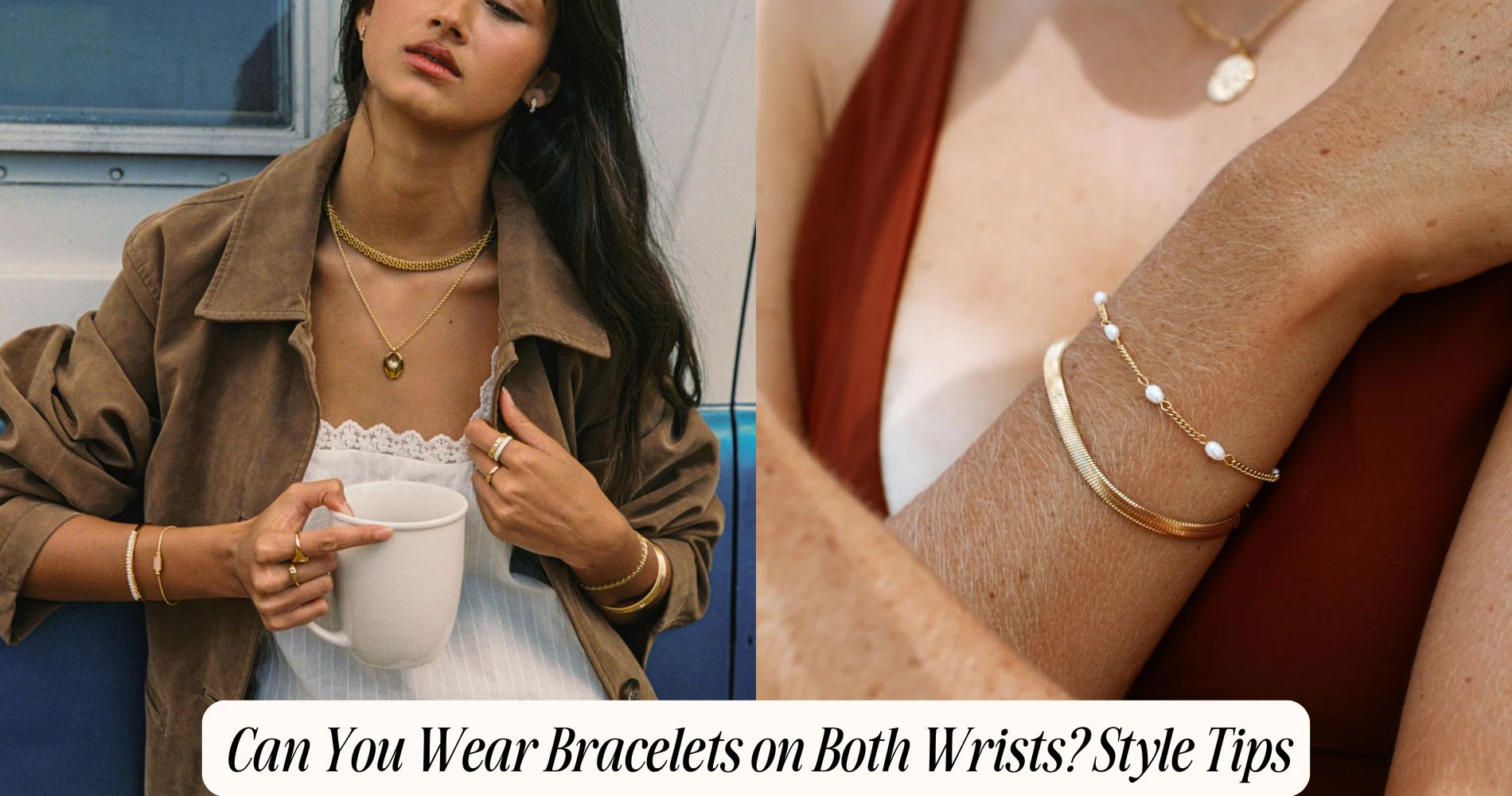
Can You Wear Bracelets on Both Wrists? Style Tips
Can you wear bracelets on both wrists? Yes—you can wear bracelets on both wrists when you balance them with intention. Go symmetrical by matching metals, finishes, and proportions, or try an asymmetrical look by pairing one statement cuff with lighter pieces on the opposite wrist. Repeat a unifying element—such as a gold tone or shared motif—to keep the look cohesive. Match scale to your wrist size, align finishes, and limit stacks to three per wrist for comfort. Mixing textures thoughtfully adds depth, while letting one wrist anchor and the other accent keeps the style polished. Versatile pieces like Everyday Bracelets make it easy to build balanced, wearable pairings for outfits, watches, and rings.
Finding Balance: Symmetry vs. Asymmetry
Even before you stack, decide if you want mirrored polish or effortless contrast. If you crave symmetrical balance, match metals, finishes, and proportions on both wrists. Think twin bangles, identical chains, or two slim cuffs—clean, modern, and instantly cohesive.
Keep textures aligned and spacing equal to avoid visual noise.
If you prefer asymmetrical flair, offset one statement piece with a lighter mix opposite it. Pair a chunky chain with delicate links, or a rigid cuff with soft beads.
Repeat one element—metal tone or motif—to keep cohesion while the weights differ. Anchor the look by echoing a detail: a clasp style, a charm shape, or a brushed finish.
Before heading out, do a mirror test: if your eye moves smoothly, you’ve nailed balance.
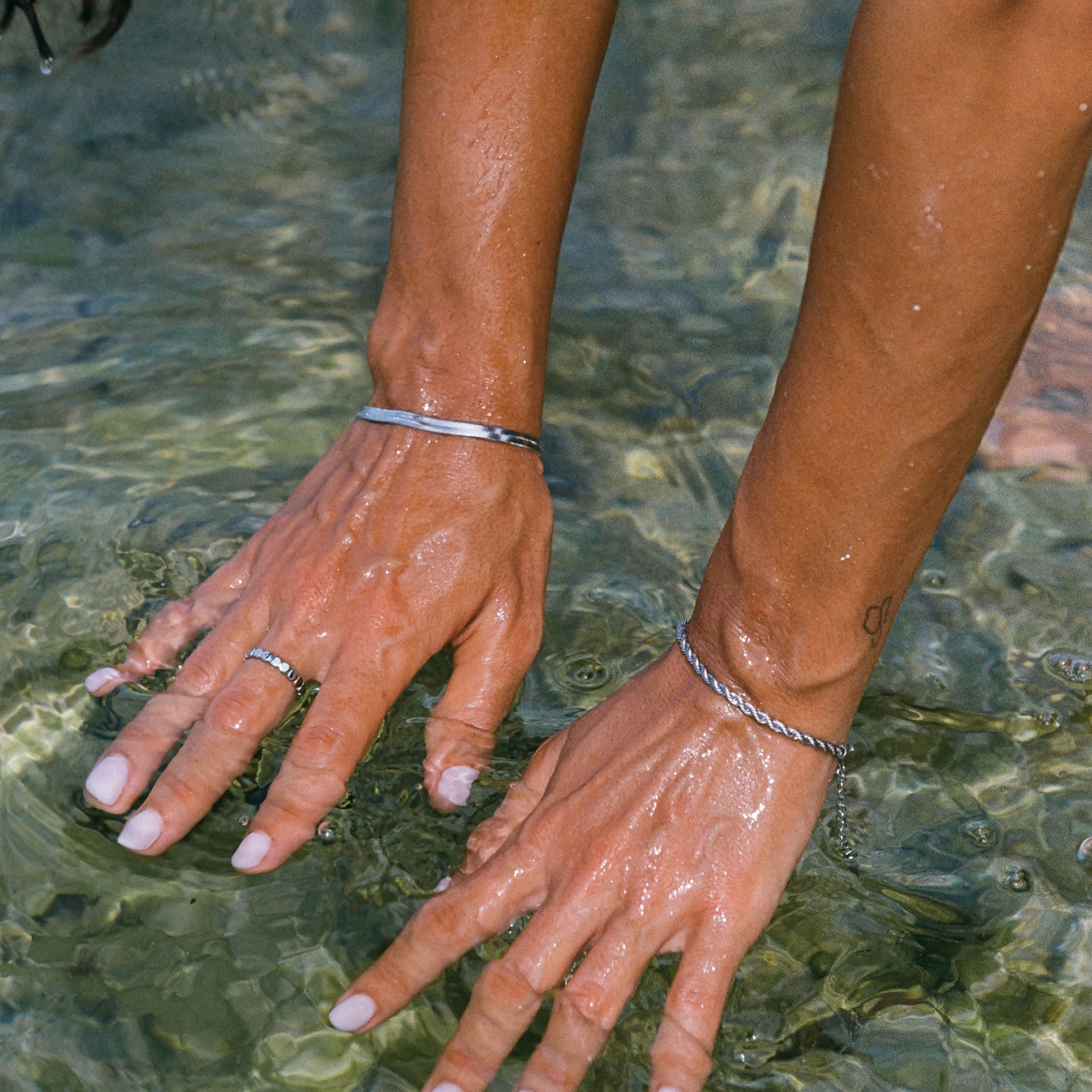
Choosing the Right Scale for Your Wrists
Once your balance feels right, scale makes the look. Match bracelet sizes to your wrist proportions so stacks feel intentional, not bulky. If your wrists are slim, choose thinner cuffs, delicate chains, and flat bangles; keep diameters snug so pieces don’t spin.
Medium wrists handle mixed widths—try a mid-weight cuff anchored with two finer strands. Fuller wrists benefit from substantial shapes: wider cuffs, chunky links, or sculptural bangles that read bold, not cramped.
Test scale quickly: make a fist—if bracelets compress or gap wildly, adjust size or reduce count. Aim for movement without slippage past the hand.
Keep visual weight even across both wrists by echoing height and width, not duplicating pieces. Prioritize comfort—light enough for all-day wear, solid enough to sit securely.
Mixing Metals Without Clashing
While mixed metals can look chaotic, you can make them cohesive by repeating a dominant tone and echoing it on both wrists.
Choose one hero metal—gold, silver, or rose gold—then let the others play support. Aim for a 70/30 balance to create instant metal harmony.
Anchor each wrist with a similar element: two slim gold bangles, for example, then add a single silver accent on both sides.
Keep finishes aligned; pair polished with polished or brushed with brushed for a clean read. Match undertones to your skin: warm favors gold and rose, cool leans silver.
Repeat shapes or hardware to tie everything together. If you wear a watch, treat it as the anchor metal.
Edit ruthlessly. Simplicity telegraphs style confidence.

Combining Textures and Materials
After you balance metals, bring depth with contrast. Mix tactile elements—smooth bangles beside braided leather, matte ceramic near glossy enamel—to make each piece pop.
Use layering techniques to vary weight and finish: pair a chunky, hammered cuff with a slim silk cord or seed-bead strand. Keep a common thread, like a shared color or motif, so your contrasting styles feel intentional, not chaotic.
Play with organic versus polished. Wood, shell, or rattan cool down high-shine steel; velvet or suede softens chain links.
Add a single statement texture—stingray, croc-embossed, or woven wire—then echo it subtly elsewhere. Mind proportion: one bold texture per wrist, supported by quieter surfaces.
Test movement and comfort; textured pieces should glide, not snag. Edit ruthlessly until the mix reads cohesive and modern.
Stacking Strategies for Both Sides
Even with symmetry in mind, build each wrist with a clear role: anchor one, accent the other.
Create balance by stacking your dominant side with a solid base—think one substantial cuff or a weighty chain—then add two slim companions. On the opposite wrist, keep it lighter: one hero bracelet plus a delicate support. This contrast keeps wrist harmony without visual overload.
Use layering techniques that vary thickness and silhouette: flat curb next to a beaded strand, then a sleek bangle. Limit colors to one metal plus a subtle texture.
Cap each stack at three pieces; stop when movement looks fluid, not clunky. Mirror a single element across sides—shared metal, repeating bead size, or matching finish—to unify the look while letting each wrist speak.
Coordinating With Watches and Rings
Stacks set the stage; now sync them with your watch and rings. Anchor one wrist with your watch; let bracelets frame it, not fight it. Match metal tones first, then finish with texture. If you wear mixed metals, repeat each metal at least twice for balance.
Consider watch styles: a chunky diver pairs with solid cuffs or link chains; a slim dress watch prefers minimal bangles or a sleek cord. Keep spacing tight near the case to avoid clatter and scratches.
Coordinate ring designs with your bracelet vibe. Geometric rings echo angular cuffs; organic rings complement beaded or leather pieces. Distribute visual weight: bold watch and statement ring on opposite hands, lighter stacks alongside.
Limit motifs to two families to keep your look intentional and cohesive.
Matching Bracelets to Outfits and Occasions
While your personal style drives the mix, let the outfit and setting set the rules. Start with occasion appropriateness: keep stacks minimal for the office, sleek for formal events, carefree for weekends.
Match bracelet weight to fabric weight—delicate chains with silk blouses, chunkier cuffs with denim or knits. Balance both wrists: if one side features a statement cuff, keep the other side slim. Prioritize quiet hardware with tailored looks; try textured bangles with relaxed fits.
Use matching styles without going matchy-matchy: echo silhouettes or materials in your shoes or bag. For active days, choose soft cords or silicone that won’t snag. For evening, upgrade to refined metals.
Consider sleeve length—bracelets need space to move. Finally, test sound and comfort; clatter kills polish.

Color Palettes and Gem Accents
Because color directs the eye, build your bracelet pairing around a tight palette. Pick two or three hues and repeat them across both wrists for cohesion.
Try monochrome stacks for sleek minimalism, or complementary color combinations—navy with gold, emerald with chocolate, blush with gunmetal—for modern contrast.
Use metals as anchors: warm gold with reds, oranges, and earthy stones; cool silver with blues, violets, and greys; rose gold with blush and taupe.
Add gems thoughtfully. Let gemstone meanings guide your mood: amethyst for calm, citrine for confidence, onyx for grounding, turquoise for protection, rose quartz for love.
Balance shine and matte. Mix one saturated color with neutrals to avoid noise.
Echo a hero stone on each wrist so the look feels intentional, not matchy.
Maintenance, Comfort, and Fit Tips
Even the chicest stacks fall flat if they chafe, clank, or tarnish fast, so dial in upkeep and fit from the start.
Prioritize daily care: wipe metals after wear, store pieces separately, and keep perfumes, lotions, and chlorine off finishes. Rotate sets to reduce friction and extend plating life.
Aim for a one-finger gap; bangles should skim, not slam. Try lightweight cuffs on your dominant wrist and softer chains on the other for balance. Make quick sizing adjustments with removable links, silicone guards, or micro extenders. If a bracelet spins, add a tiny charm or spacer bead to anchor it.
Listen to your skin—if redness or pinching starts, swap materials. Opt for hypoallergenic metals, smooth edges, and flexible cords for all-day comfort.
Frequently Asked Questions
Are There Cultural Etiquette Rules About Bracelets on Both Wrists?
Yes, but it varies. You’ll navigate cultural significance and fashion norms differently by region. In India or Bali, stacked bangles can symbolize status or rites. Research local customs, avoid sacred motifs, balance metals, and keep proportions intentional.
Do Bracelets Interfere With Fitness Trackers or Health Sensors?
Yes—bracelets can interfere. They may cause motion artifacts, skin pressure, and signal occlusion, reducing fitness tracker compatibility and health sensor accuracy. Wear bracelets on the opposite wrist, choose soft, slim styles, avoid metal stacking, and keep sensors snug with 1–2 finger clearance.
What Bracelet Styles Are Office-Appropriate on Both Wrists?
Choose office friendly styles: slim bangles, minimalist chains, leather cords, or pearl strands on each wrist. Stick to professional color palettes—gold, silver, black, navy, nude. Keep symmetry or deliberate contrast, avoid noisy charms, and guarantee sleeves glide smoothly.
How to Photograph Double-Wrist Stacks for Social Media?
Shoot at golden hour, face a window, and use bounce cards. Try double exposure for motion flair. Apply diffused lighting techniques, lock focus on wrists, angle elbows in, avoid cluttered backgrounds, and edit for contrast, color harmony, and skin tone.
Are There Allergy-Safe Materials for Sensitive Skin Wearers?
Yes—opt for hypoallergenic materials. Choose titanium, surgical stainless steel, solid gold (14k+), platinum, or niobium. Avoid nickel, brass, and cheap plating. Test pieces on inner wrist, clean regularly, and layer silicone or fabric liners if skin sensitivity flares.
Conclusion
Yes—you can wear bracelets on both wrists and look intentional. Keep balance in mind: mix symmetry with slight asymmetry, scale pieces to your wrist size, and blend metals confidently. Pair smooth with textured, hard with soft. Stack thoughtfully on each side, and coordinate with your watch and rings. Match materials and colors to the outfit and occasion, and edit before you leave. Prioritize comfort, proper fit, and quiet movement. When in doubt, remove one piece.





Leave a comment
This site is protected by hCaptcha and the hCaptcha Privacy Policy and Terms of Service apply.