


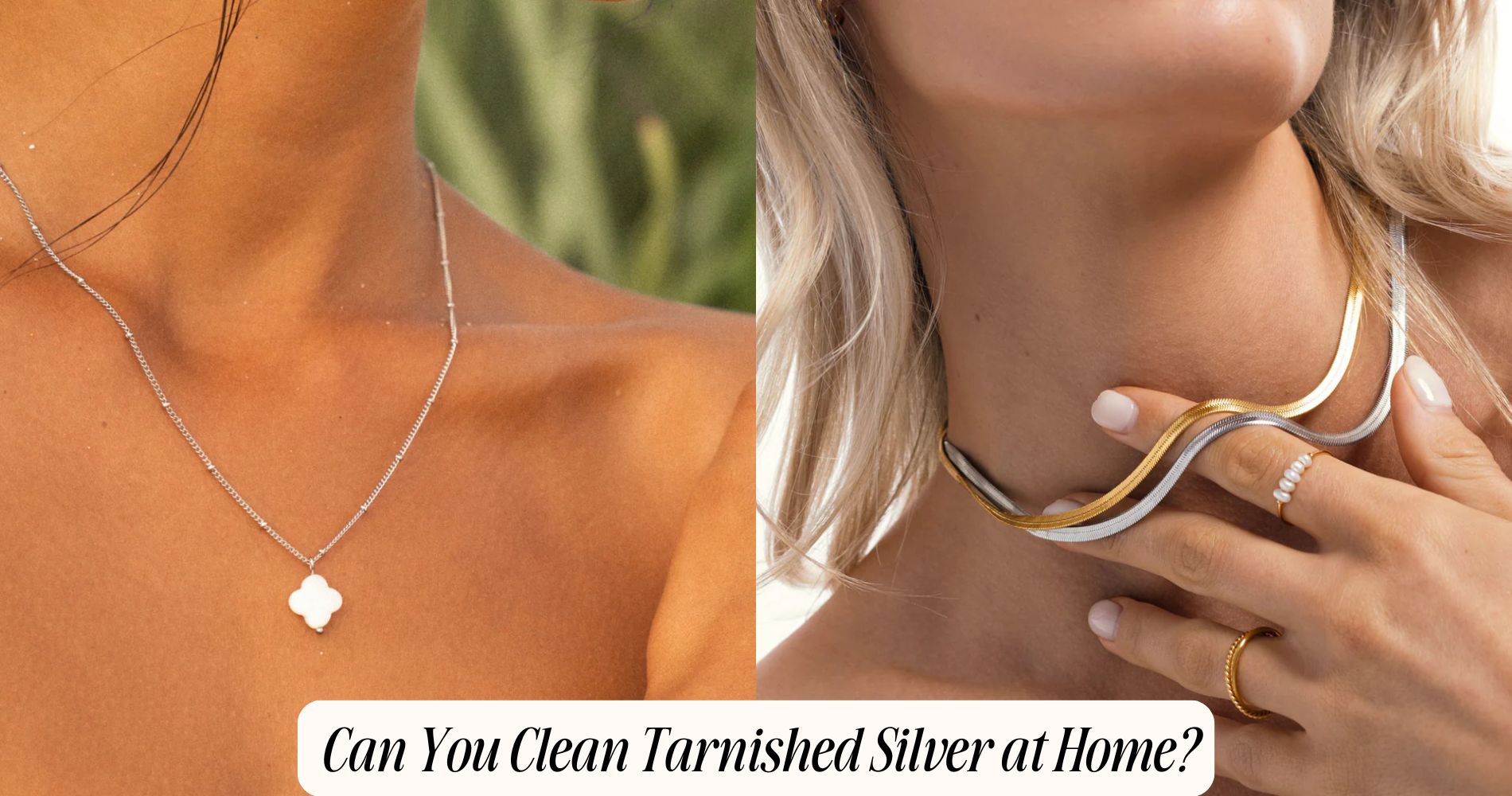
Can You Clean Tarnished Silver at Home?
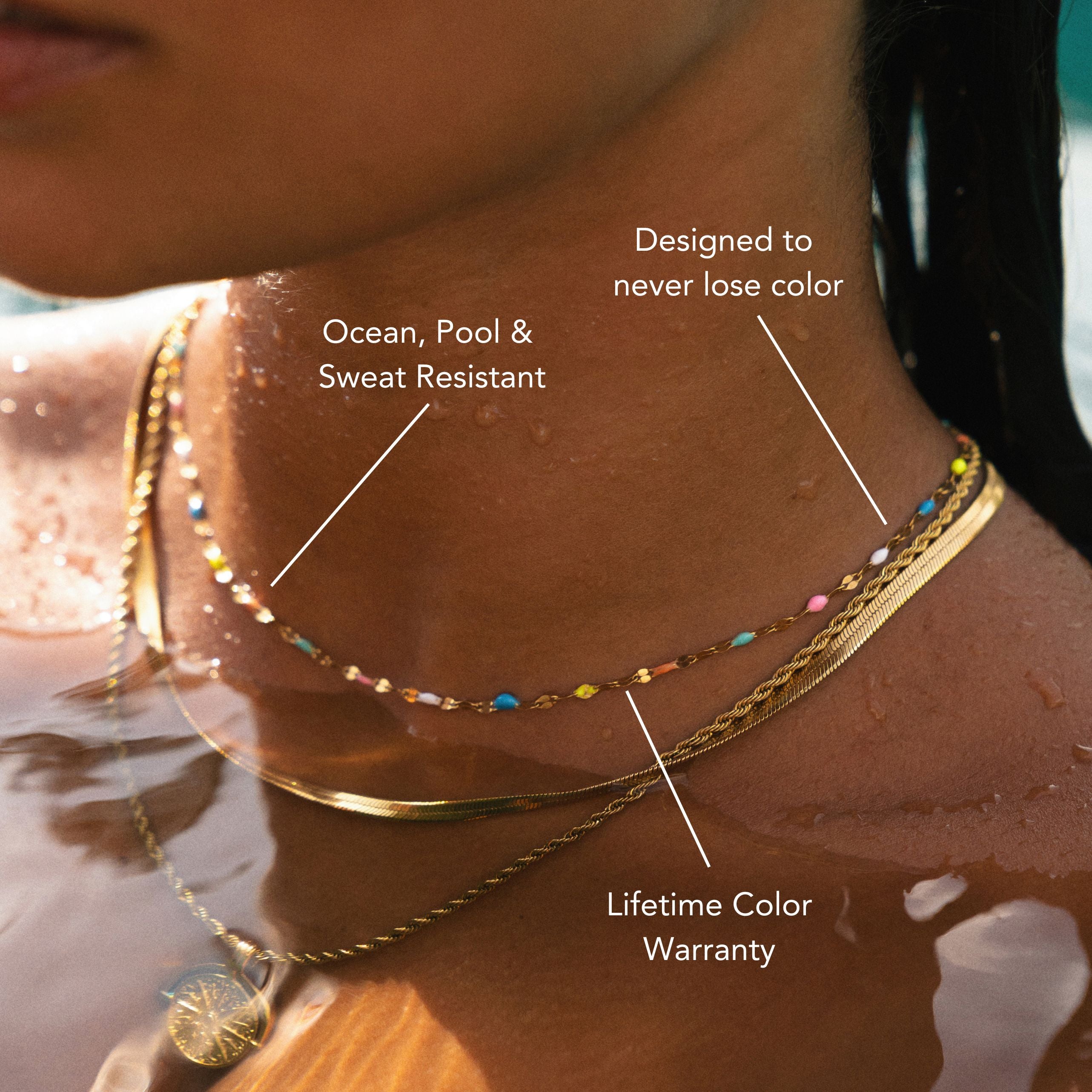
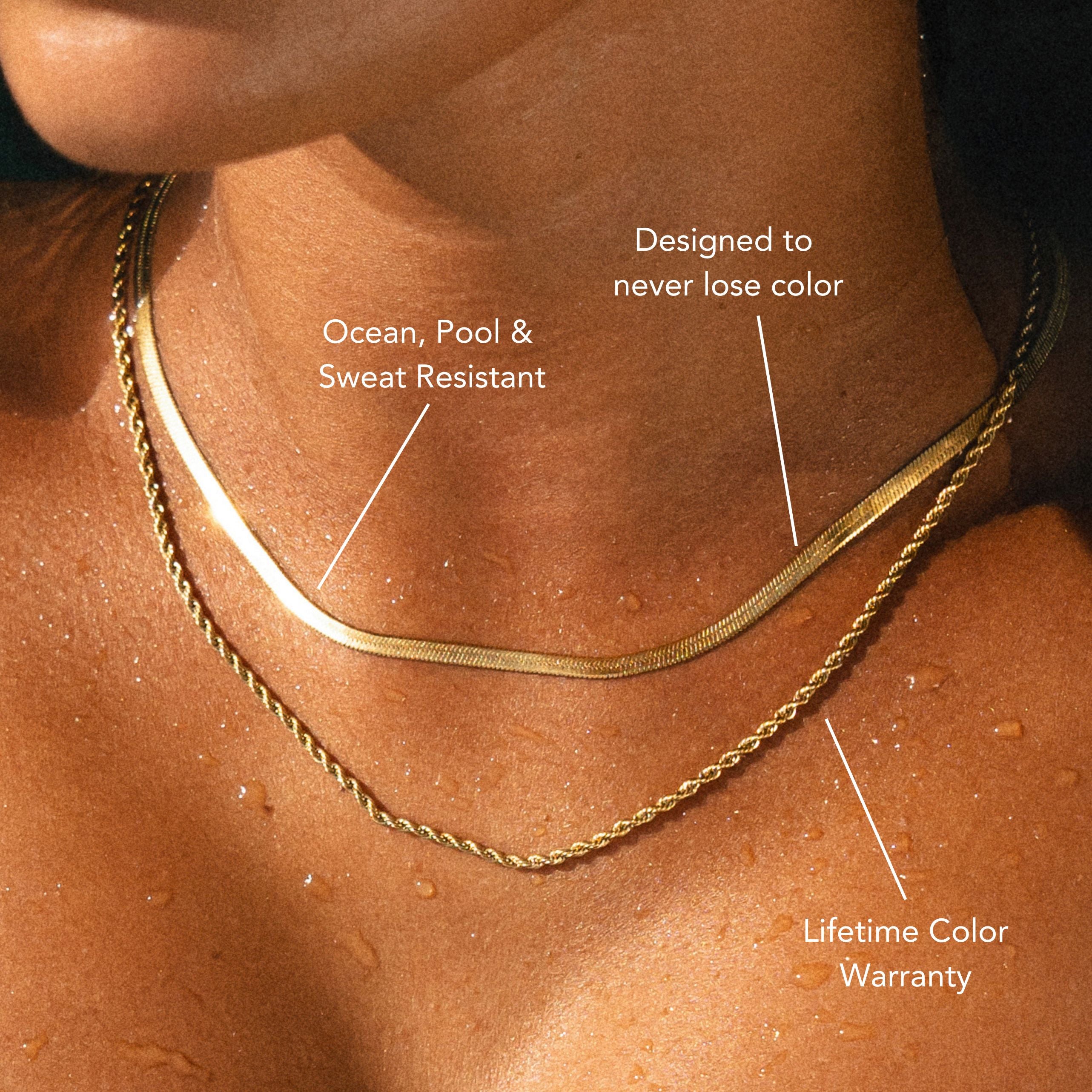
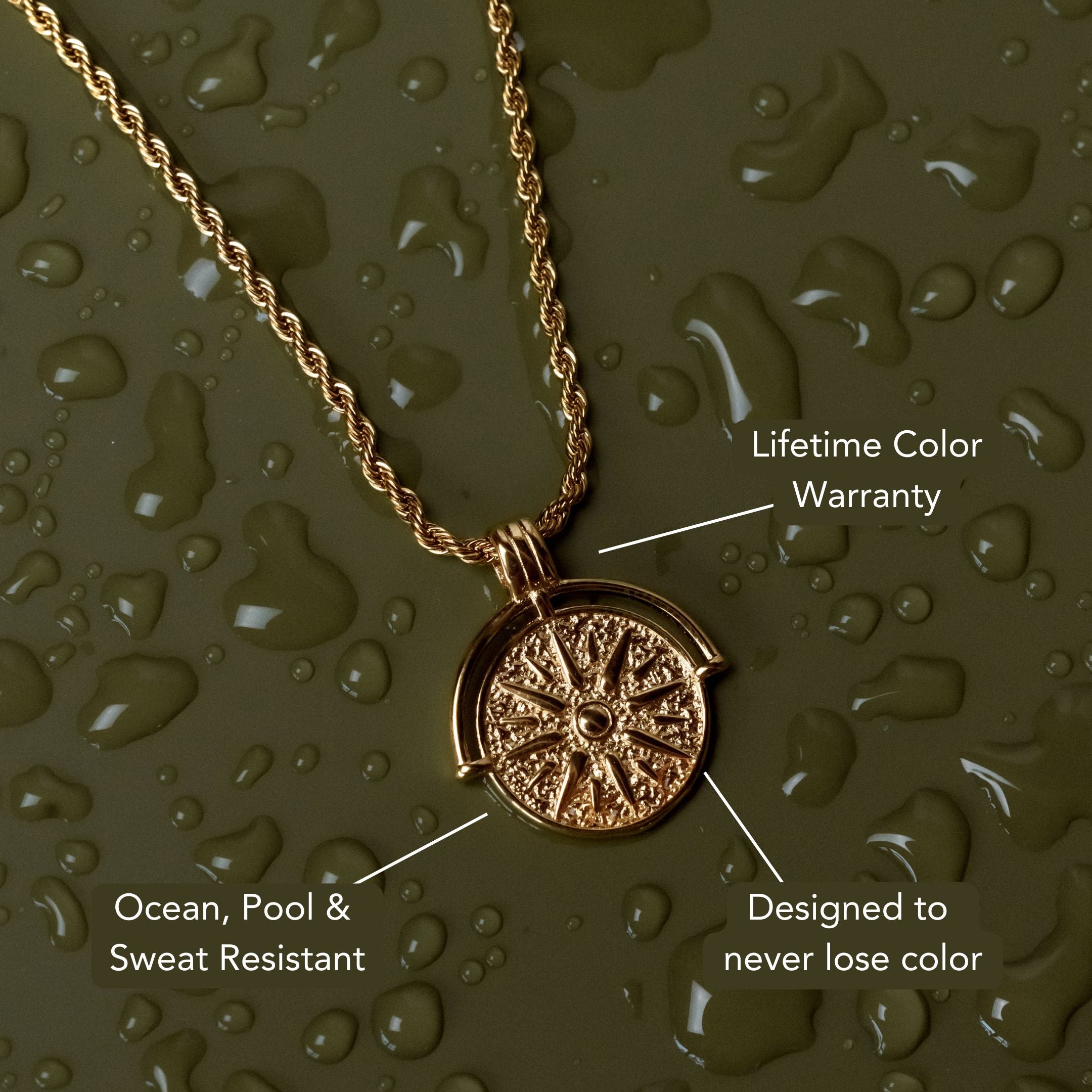
Can you clean tarnished silver at home? Yes—you can clean tarnished silver at home when you match the method to the alloy and level of tarnish. Begin with a gentle wash using lukewarm distilled water and pH-neutral dish soap. For silver sulfide tarnish on solid silver, an aluminum foil and baking soda bath can be effective—though it should be avoided on thin plating. Heavier oxidation or intricate details may require a neutral-pH commercial silver polish. Always rinse thoroughly and dry immediately. Choosing durable pieces like Waterproof Jewelry can reduce tarnish buildup in everyday wear. Store silver with anti-tarnish strips in a low-humidity, sulfur-free environment to slow future discoloration, and next you’ll see exactly which method fits each situation.
What Causes Silver to Tarnish
Although pure silver is relatively inert, it tarnishes when its surface reacts with sulfur-containing gases—primarily hydrogen sulfide (H2S) and sulfur dioxide (SO2)—forming silver sulfide (Ag2S). You observe this as a darkened film that progresses from yellow to brown to black. The rate depends on environmental factors: ambient H2S concentration, humidity, temperature, and airborne particulates. Elevated relative humidity accelerates ion mobility, while chlorides and nitrates from urban pollution catalyze surface chemical reactions.
Contact-induced contamination matters. Residual sulfur in rubber bands, certain papers, felt, and wool releases volatiles that attack silver. Skin oils, perspiration, and cosmetics supply chlorides and organics, promoting mixed corrosion products.
In coastal settings, sea salt aerosols enhance conductivity and pitting risk. Sterling silver (92.5% Ag) tarnishes faster than fine silver because copper alloying preferentially oxidizes, creating galvanic sites that facilitate sulfide formation.

How to Identify Your Type of Silver
Knowing what you’re cleaning matters because different alloys tarnish and respond to agents differently.
Start by inspecting hallmarks. Sterling silver is typically stamped “925,” “Sterling,” or “STG,” indicating 92.5% silver with copper or other metals. Coin silver may read “900,” while fine silver reads “999.”
For silver plating, look for “EPNS,” “EP,” “SP,” “Silverplate,” or brand-specific plate marks; these indicate a thin silver layer over base metal.
Test magnetism; silver isn’t magnetic, but some base metals under plating may show slight pull.
Assess color and luster: sterling silver exhibits a warm gray sheen; plating can show yellowish or coppery bleed-through on edges and high-wear points.
Check weight and resonance: solid sterling feels denser and rings clearer than plated wares with brass or nickel substrates.
When to Choose DIY vs. Store-Bought Cleaners
Before you reach for a cleaner, evaluate tarnish severity, alloy, surface condition, and object value to set your method.
Light, uniform sulfide films on sterling or coin silver respond well to household chemistry—aluminum-foil baths or sodium bicarbonate slurries—offering clear DIY advantages: low cost, controllable abrasivity, and minimal chemical load.
Choose DIY for robust, uncoated pieces with shallow tarnish and no porous inlays.
Escalate to commercial pastes, creams, or dip formulations when you need predictable kinetics, standardized abrasives, or inhibitor packages.
Store bought convenience matters for time-sensitive jobs, heavy oxidation, intricate filigree, or mixed-metal assemblies labeled “lacquered” or “silverplate.”
Avoid aggressive dips on thin plating or etched surfaces.
For museum-grade, hallmarked, or high-value items, prioritize neutral pH products and test in inconspicuous zones.

Gentle Cleaning With Soap and Water
Start with the least invasive method: a lukewarm wash using distilled water and a few drops of pH‑neutral dish soap. This water method stabilizes silver surfaces, lifts grime, and won’t abrade patina.
Mix a small basin, then immerse the piece briefly. Using a soft, lint‑free microfiber cloth or natural‑bristle brush, work the solution over crevices with minimal pressure. Keep motions linear to avoid micro‑scratches.
Rinse immediately in fresh distilled water to prevent detergent residue and ionic spotting. Blot dry with a clean microfiber towel; don’t air‑dry, which can leave deposits.
For hollowware or hinged components, wick moisture from joints with absorbent paper points. If needed, repeat once. Use gentle soap only—no ammonia, citrus, or abrasives.
Conclude with a dry buff to restore luster without removing silver.
Baking Soda and Aluminum Foil Method
Two common household materials can reverse silver sulfide tarnish via galvanic reduction: aluminum and sodium bicarbonate.
Line a non-reactive basin with aluminum foil, shiny side up. Place your silver so it contacts the foil. Add hot, near-boiling water to submerge the pieces, then dissolve 1 tablespoon baking soda per cup of water.
The electrolyte enables electron transfer from aluminum to the silver sulfide, converting Ag2S back to metallic silver while oxidizing aluminum.
Agitate gently with tongs to maintain contact points. Monitor progress; remove items once tarnish lifts, typically within minutes. Rinse with cool water and dry with a lint-free cloth.
Avoid this method on items with intentional patina, porous stones, or lacquer. It’s efficient for chains, flatware, and uncoated hollowware.
Using White Vinegar and Baking Soda
If the foil-and-bicarbonate reduction isn’t appropriate for plated pieces or items with intricate settings, use an acetic acid–bicarbonate cleaning instead.
Prepare a 1:1 vinegar solution using distilled white vinegar and deionized water to control mineral contamination. Submerge the silver for 5–10 minutes to soften silver sulfide films.
Remove and apply a slurry of baking soda and minimal water; use a soft-bristle brush to agitate crevices, maintaining light pressure to avoid abrasion. The weak acid loosens corrosion products; the bicarbonate slurry provides mild mechanical action and pH buffering.
Rinse thoroughly with warm deionized water, then neutralize residues by a final rinse in fresh vinegar solution followed by water. Pat dry with a lint‑free microfiber cloth.
Avoid prolonged immersion, ultrasonic agitation, or abrasive media on plated or porous components.
Polishing With Commercial Silver Cleaners
While home chemistries address light tarnish, commercial silver polishes deliver controlled abrasion and chemical chelation for faster, uniform results. You’ll see superior commercial cleaner effectiveness when you match the product to the substrate: solid sterling, plated ware, or lacquered surfaces.
For ideal silver polish application, use a lint-free microfiber, apply a pea-sized amount, and work in short, linear strokes to minimize micro-scratching. Maintain light pressure; let the abrasive and thiol/chelating agents do the work.
Monitor the slurry color shift; when it grays, you’re lifting sulfide layers. Buff with a clean section until the surface exhibits even specular reflection. Rinse if the manufacturer specifies, then dry thoroughly to prevent chloride spotting.
Finish with a microcrystalline wax barrier to slow re-tarnishing and extend maintenance intervals.

Safe Care for Jewelry With Stones or Enamel
Because gemstones, enamels, and settings respond differently to chemistry and heat, you must tailor cleaning to the weakest component, not the silver. Identify the substrate: porous gems (opal, turquoise, pearl), heat‑sensitive adhesives, or vitreous enamel.
For stone care, avoid ammonia, ultrasonic tanks, and steam on fracture‑filled, oiled, or porous stones. Use pH‑neutral soap in distilled water, a soft brush, and minimal dwell time; keep mountings downward to prevent seepage behind bezels.
For enamel protection, skip abrasive polishes and acidic dips. Clean with a microfiber cloth slightly dampened with distilled water; for grime at metal junctions, use a wooden pick, then rinse and blot dry.
Mask sensitive areas with painter’s tape before applying silver paste to exposed metal, and buff locally with a lint‑free cloth.
Preventing Tarnish: Storage and Daily Habits
Though polishing restores luster, preventing sulfide formation starts with controlling exposure. You’ll slow tarnish by isolating silver from sulfur sources, humidity, and atmospheric pollutants.
Use proper storage: airtight containers or zip pouches with anti-tarnish strips (activated carbon or copper-based), plus low-RH control via silica gel (target 35–45% RH). Wrap pieces in neutral pH, sulfur-free tissue or microfiber; avoid rubber bands, wool, and newsprint. Store individually to prevent abrasion and galvanic contact with base metals.
Adopt daily maintenance. After wear, degrease fingerprints—chlorides accelerate corrosion—using a lint-free cloth or mild surfactant rinse, then dry thoroughly.
Wear silver regularly; micro-friction retards film formation. Keep items away from cosmetics, chlorine, and sulfurous foods (eggs, onions). For display, use closed cases with desiccants and replace adsorbents per manufacturer intervals.
Common Mistakes to Avoid When Cleaning Silver
Even with good intentions, you can damage silver by using abrasive media, aggressive chemistries, or improper technique.
Don’t deploy scouring powders, hard-bristle brushes, or melamine foam; these mar the surface and strip patina. Avoid chlorine bleach, ammonia, and acidic dips on sterling or silver-plate; they promote pitting, dealloying, and base-metal exposure.
Never soak hollow-handled knives or weighted candlesticks; moisture intrudes and corrodes cores.
Skip ultrasonic cleaners unless you verify construction and stone stability. Don’t over-polish; excessive mechanical polishing removes microns of metal and thins plating.
Use controlled pressure and lint-free cloths as best practices. Select purpose-made cleaning tools and neutral-pH polishes.
Rinse thoroughly, dry immediately, and isolate wood acids and rubber off-gassing. Test inconspicuously before full treatment.
Frequently Asked Questions
Is Cleaning Silver Safe for Antique Pieces With Patina Value?
Yes, but you must proceed conservatively. Prioritize patina preservation and antique care: avoid abrasives, ionic dips, and ultrasonic cleaners. Use deionized water, neutral pH surfactant, cotton swabs, and microcrystalline wax. Document condition; consult a conservator for high-value pieces.
Can I Clean Silver-Plated Items Without Thinning the Plating?
Yes, if you employ gentle silver cleaning methods designed for plating preservation. Use non-abrasive detergents, microfiber, and minimal dwell time. Avoid dips and polishing compounds. Test discreetly, rinse thoroughly, pat dry, and apply microcrystalline wax to reduce future abrasion.
How Often Should I Schedule Professional Silver Maintenance or Appraisal?
Schedule professional silver maintenance annually; increase silver maintenance frequency to biannually for high-use or humid environments. Arrange appraisals every 3–5 years; expedite after market spikes, provenance changes, or damage. Use credentialed conservators; document condition reports, hallmark verification, and valuation comparables—key appraisal scheduling tips.
Are Ultrasonic Cleaners Safe for All Silver and Jewelry Settings?
No. Ultrasonic cleaners aren’t universally safe. You must assess jewelry materials, solder integrity, gemstone inclusions, and settings. Ultrasonic effectiveness varies; avoid on oxidized silver, porous or fracture-filled gems, glued settings, enamel, pearls, opals. Consult manufacturer specs and gemological guidance.
What Eco-Friendly Disposal Methods Exist for Used Silver-Cleaning Solutions?
You use eco friendly solutions via neutralization, dilution, and municipal HHW drop-off. For safe disposal, neutralize acids with baking soda, filter solids, label containers, avoid storm drains, follow SDS guidance, and consult local wastewater pretreatment or recycling programs.
Conclusion
Yes—you can clean tarnished silver at home if you match method to metal and finish. Verify whether it’s sterling, silver-plated, or fine silver, then select techniques accordingly. Start with surfactant wash, escalate to electrolytic baking-soda/aluminum treatment, or use a non-abrasive commercial polish. Protect stones and enamel by isolating them. Finish with thorough rinse, microfiber dry, anti-tarnish storage, and low-sulfur environments. Avoid abrasives, ammonia on gemstones, and over-polishing plate. Consistency preserves luster and material integrity.







Leave a comment
This site is protected by hCaptcha and the hCaptcha Privacy Policy and Terms of Service apply.